
Medical Disclaimer
The information on this website is for educational purposes only and is not a substitute for professional medical advice, diagnosis, or treatment. Always consult a qualified healthcare provider before starting any hormone therapy. Individual results may vary. TRTscout does not provide medical services or prescribe medications.
Key Takeaways
- Testosterone directly influences dopamine signaling in the brain's reward circuits, making it a key biological driver of motivation, drive, and goal-directed behavior.
- Low testosterone (below 300 ng/dL, or lower in symptomatic men) can cause motivational deficits, emotional flatness, anhedonia, and mental fatigue — symptoms often mistaken for burnout or depression.
- Multiple randomized controlled trials, including the landmark NIH-funded Testosterone Trials, confirm that TRT significantly improves energy, vitality, and mood in hypogonadal men.
- Most men on TRT begin noticing improvements in energy and motivation within 2–4 weeks, with full optimization typically occurring between 3–6 months into treatment.
- Free testosterone, SHBG, estradiol, cortisol, and thyroid function all interact with motivational capacity — a thorough hormonal panel is essential before starting treatment.
- TRT is an established, FDA-recognized medical therapy that is safe and effective for confirmed hypogonadism when prescribed and monitored by a qualified provider.
The Hidden Link Between Testosterone and Motivation
If you've been feeling flat, uninspired, or chronically unmotivated, there may be more going on than stress or burnout. The connection between testosterone and motivation is well-established in medical research, and when your testosterone levels drop below optimal range, the effects on your drive, ambition, and mental energy can be profound. This isn't just about the gym or libido — low testosterone can quietly erode your will to pursue goals, engage with life, and show up as your best self every day.
This article explores the science behind testosterone's role in motivation, how low T specifically drains your mental and emotional drive, and what your real options are if this resonates with you.
Disclaimer: This article is for educational purposes only and does not constitute medical advice. Always consult a qualified healthcare provider before starting or changing any treatment.
If you're not sure whether your symptoms point to low testosterone, take the free Low T symptom quiz to get a clearer picture before speaking with a provider.

What Is Testosterone's Role in the Brain?
Most men associate testosterone with physical traits — muscle mass, libido, beard growth. But testosterone is also a powerful neuroactive hormone that directly influences brain chemistry. It crosses the blood-brain barrier and interacts with multiple neurotransmitter systems that regulate mood, reward, and goal-directed behavior.
Research published in the journal Frontiers in Neuroendocrinology shows that testosterone modulates dopamine signaling in the brain's reward pathways — particularly in the nucleus accumbens and prefrontal cortex, regions directly tied to motivation, decision-making, and the drive to pursue rewards. When testosterone levels are optimal, these pathways function efficiently, helping you feel energized, focused, and driven. When testosterone is low, dopamine activity in these circuits can become blunted, making everyday tasks feel like a chore and longer-term goals feel unreachable.
Testosterone also influences serotonin levels and the hypothalamic-pituitary-adrenal (HPA) axis, which governs stress response. Men with low testosterone often have a dysregulated stress response, making them more susceptible to chronic fatigue and emotional flatness — both of which devastate motivation. Additionally, testosterone interacts with androgen receptors throughout the limbic system, the brain's emotional processing center, further reinforcing its direct impact on how you feel and function mentally.
Understanding this neurological dimension is crucial. Motivation isn't just willpower — it's biology. And when your hormones are off, no amount of pep talks or to-do lists will fully compensate. For a deeper dive into how testosterone affects cognitive function, see our article on TRT and Brain Fog: Can Testosterone Improve Mental Clarity.
How Low Testosterone Specifically Kills Your Drive
When testosterone levels fall below the optimal range — generally considered below 300 ng/dL total testosterone, though symptoms can appear even in the low-normal range — men often report a cascade of motivation-draining symptoms. These don't always arrive dramatically. More often, they creep in gradually, making it easy to attribute them to aging, work stress, or poor sleep.
The Testosterone and Motivation Deficit: What It Feels Like
Here's what clinically low testosterone actually looks like from a motivation standpoint:
- Reduced goal-directed behavior: You set intentions but struggle to follow through. Projects you once felt passionate about now seem pointless or exhausting.
- Anhedonia: A blunted ability to feel pleasure or anticipate reward — this is closely tied to reduced dopamine activity from low T.
- Mental fatigue and brain fog: Tasks that require sustained concentration feel draining within minutes, making productivity feel impossible.
- Apathy and emotional flatness: A pervasive sense of not caring — not depression necessarily, but a dullness to life that removes the urgency to pursue anything.
- Reduced competitive drive: Men often describe losing the edge — the hunger to compete, improve, or strive that once felt natural.
- Social withdrawal: Low motivation extends to relationships, with men pulling back from friends, family, and professional networking.
These symptoms are not character flaws or laziness. They are measurable physiological consequences of hormonal imbalance. Research from the Journal of Clinical Endocrinology and Metabolism confirms that hypogonadal men consistently score lower on measures of vitality, energy, and psychological well-being compared to eugonadal controls. If these symptoms sound familiar, consider reading our guide on 10 Signs of Low Testosterone in Men for a comprehensive symptom checklist.
The Dopamine-Testosterone Connection
Dopamine is often called the brain's motivation molecule. It's the neurochemical responsible for anticipatory pleasure — the drive you feel when pursuing a goal, not just when achieving it. And testosterone plays a direct role in regulating dopamine production, release, and receptor sensitivity.
Studies in animal models and human subjects consistently show that testosterone administration increases dopamine activity in the mesolimbic pathway — the core reward circuit of the brain. A 2016 study published in Biological Psychiatry found that testosterone administration in healthy young men increased willingness to expend effort in pursuit of rewards, directly linking androgenic activity to motivated behavior.
Conversely, when testosterone levels drop, dopamine tone in the reward system falls with it. This creates a neurochemical environment where effort feels disproportionately costly relative to anticipated reward. In plain terms: your brain stops believing that trying is worth it. This is why men with low T often describe a peculiar kind of stuck feeling — they know they should want to do things, but the internal spark simply isn't there.
This mechanism also explains why low testosterone is so closely intertwined with depressive symptoms. The overlap between clinical depression and hypogonadism is significant — a fact explored in detail in our related article on TRT and Depression: Can Testosterone Improve Your Mood. When dopamine and testosterone are both suppressed, the resulting state can look and feel very much like a depressive disorder, even when other diagnostic criteria aren't fully met.
Other Hormonal Factors That Compound the Problem
Testosterone doesn't work in isolation. Several related hormonal imbalances can amplify its effect on motivation, and understanding these interactions can help explain why some men experience more severe symptoms than others at similar testosterone levels.
Cortisol and the Stress-Testosterone Relationship
Chronic stress elevates cortisol, which directly suppresses testosterone production via the hypothalamic-pituitary-gonadal (HPG) axis. This creates a vicious cycle: low testosterone impairs stress resilience, which raises cortisol, which further suppresses testosterone. Men in high-stress careers or life circumstances often find their motivation collapse accelerating over time for exactly this reason.
Estradiol Imbalance
Testosterone converts to estradiol via the aromatase enzyme. When testosterone is low and body fat is elevated (which often co-occurs with low T), estrogen can become relatively dominant. Elevated estradiol in men is associated with mood disturbances, fatigue, and reduced drive. Managing this balance is an important part of TRT protocols — something explored in our guide on Estradiol (E2) in Men on TRT: What You Need to Know.
Thyroid and SHBG
Thyroid dysfunction can mimic many low-T symptoms and is frequently found alongside it. Similarly, sex hormone-binding globulin (SHBG) determines how much of your total testosterone is actually biologically active. A man with a total testosterone of 450 ng/dL but very high SHBG may have far less free testosterone available to his tissues than the number suggests. This is why testing free testosterone and SHBG is critical — a topic covered thoroughly in our article on Free vs Total Testosterone: What Really Matters.
Can TRT Restore Motivation? What the Research Shows
For men with clinically confirmed low testosterone, testosterone replacement therapy has shown consistent and meaningful improvements in motivation-related outcomes. Multiple randomized controlled trials have documented increases in energy, drive, mood, and cognitive function following TRT, particularly in men with baseline testosterone below 300 ng/dL.
The landmark Testosterone Trials (TTrials), a coordinated series of seven studies funded by the National Institutes of Health, found that testosterone treatment significantly improved sexual function, physical performance, and vitality in older hypogonadal men compared to placebo. The vitality trial specifically found improvements in energy and fatigue that directly translate to improved motivational capacity.
A 2014 meta-analysis published in the European Journal of Endocrinology reviewing 29 randomized trials found that TRT significantly improved mood and well-being in hypogonadal men, with notable reductions in fatigue and emotional blunting — both core components of motivational deficit. Men frequently report within weeks of starting TRT that they feel a renewed sense of purpose, find it easier to initiate tasks, and feel genuinely interested in goals and pursuits again.
It's worth noting that TRT is not a motivational shortcut for men with normal testosterone levels — the benefits are most pronounced and most clinically appropriate when a genuine deficiency exists. A qualified TRT provider will always confirm your levels through comprehensive blood work before recommending treatment. To understand what baseline tests look like, see our guide on TRT Blood Work: Which Tests You Need Before and During Treatment.
How Long Before TRT Improves Motivation?
One of the most common questions men have when considering TRT is: how quickly will I notice a difference in my energy and drive? The answer varies by individual, but research and clinical experience point to a general timeline.
Most men begin noticing improvements in energy levels and mood within the first two to four weeks of treatment. Motivation and drive typically follow in weeks four through eight, as dopaminergic tone begins to normalize and the neurological effects of testosterone restoration take hold. Cognitive improvements — sharper focus, better mental stamina, clearer thinking — often become noticeable between weeks six and twelve.
Full optimization, where motivation, physical performance, and emotional well-being are all running at their peak, typically takes three to six months. This is because TRT works gradually, rebuilding hormonal balance across multiple body systems simultaneously. Patience and consistency are essential. For a week-by-week breakdown of what to expect, our article on How Long Does TRT Take to Work is an excellent resource.
Some men also find that lifestyle adjustments — improved sleep, strength training, dietary changes — accelerate and amplify TRT's motivational benefits. Testosterone and healthy lifestyle behaviors are synergistic; each reinforces the other. This is explored further in our comparison of TRT vs Lifestyle Changes: When Do You Need Therapy.

Is TRT Right for You? What to Consider
TRT is a medically supervised, FDA-recognized therapy that has helped hundreds of thousands of men reclaim their quality of life. It is not appropriate for every man — but for those with confirmed hypogonadism and symptoms like persistent motivational deficit, fatigue, and mood changes, it is a well-supported treatment option backed by decades of research.
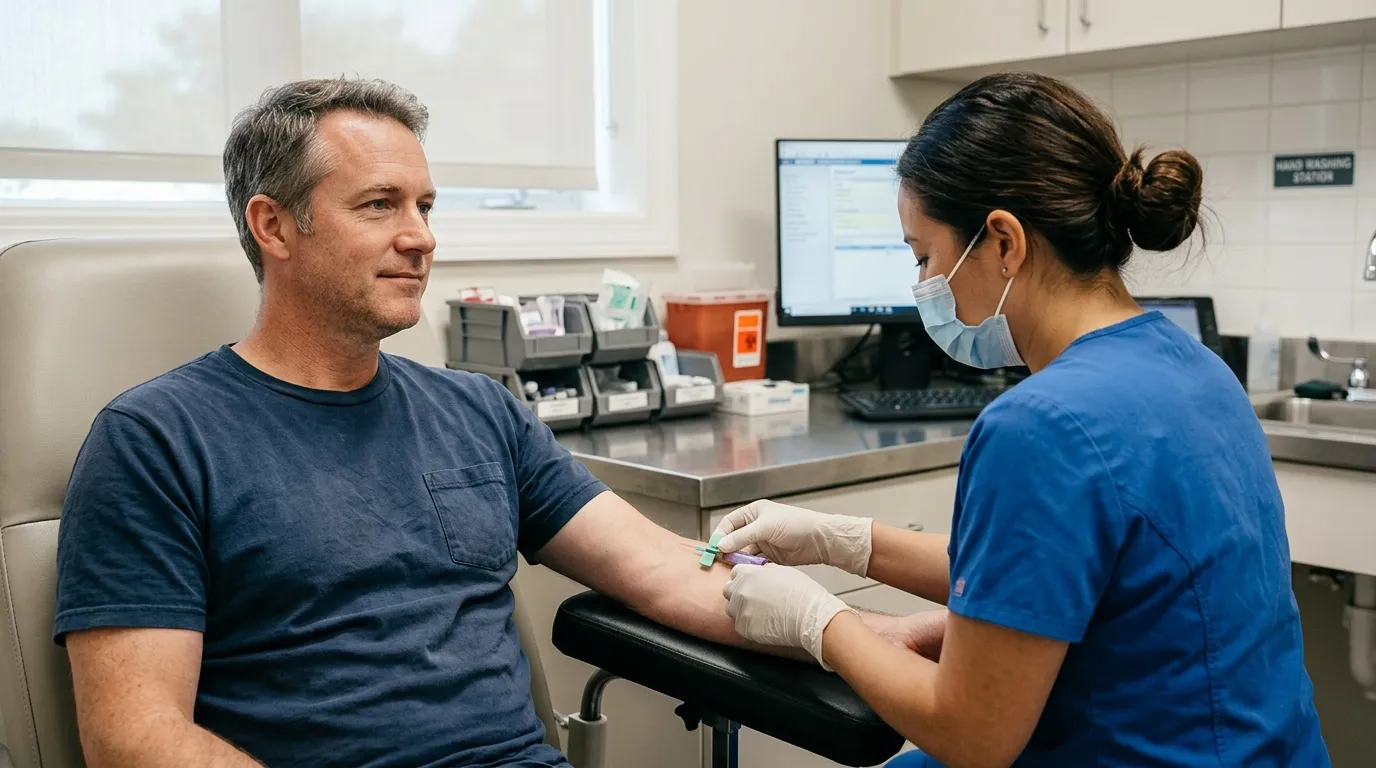
Before starting TRT, a good provider will conduct thorough blood work to confirm low testosterone, evaluate free testosterone and SHBG, assess cardiovascular health markers, check hematocrit levels (see our article on Hematocrit and TRT: Why Your Levels Matter), screen for sleep apnea, and rule out other causes of your symptoms. This screening process ensures that TRT is appropriate for your specific situation and that your treatment is individualized for optimal safety and results.
Men with certain pre-existing conditions — such as polycythemia, active prostate cancer, or untreated severe sleep apnea — may need additional evaluation before starting TRT. These considerations are well-understood by experienced providers and are fully manageable with proper monitoring. For a balanced overview of long-term safety, read our comprehensive guide on Is TRT Safe? Heart, Prostate and Long-Term Health Risks Explained.
TRT also comes in several delivery forms — injections, gels, pellets, creams — each with different pharmacokinetic profiles and practical considerations. Your provider will recommend the method best suited to your lifestyle and goals. If you're weighing your options, our article on Testosterone Injections vs Pellets: Full Comparison provides a thorough side-by-side breakdown.
Taking the Next Step: Finding the Right Provider
Understanding the relationship between testosterone and motivation is the first step — but taking action is where the real change begins. The quality of your TRT experience depends enormously on the provider you choose. A good TRT clinic will take a comprehensive approach: thorough initial blood work, individualized dosing, regular monitoring, and open communication about how you're feeling and progressing.
Telemedicine TRT clinics have made access dramatically easier in recent years, allowing men to consult with experienced providers from home. If you prefer a local option, there are excellent clinics across the country with specialists who understand men's hormonal health deeply. To explore your options, find a TRT clinic near you using our directory, or browse location-specific guides like our Best TRT Clinics in Los Angeles or Best TRT Clinics in New York roundups.
If you're still in the early stages of figuring out whether low testosterone is behind your symptoms, start with a simple self-assessment. Take the free Low T symptom quiz — it takes just a few minutes and can help you frame a productive conversation with a provider. You can also review our full guide on How to Get Diagnosed with Low Testosterone to understand the full clinical process from initial symptoms to confirmed diagnosis and treatment plan.
The connection between testosterone and motivation is real, it's biological, and it's treatable. You don't have to accept a flat, drive-less version of yourself as your new normal. With the right provider, the right protocol, and the right expectations, restoring your testosterone levels can be a genuine turning point — not just for your motivation, but for your entire quality of life.
Sources & References
- Testosterone Therapy in Men with Hypogonadism: An Endocrine Society Clinical Practice Guideline — Journal of Clinical Endocrinology & Metabolism [Link]
- Testosterone and the Brain: From Cognition to Motivation — Frontiers in Neuroscience [Link]
- Effects of Testosterone on Dopamine-Mediated Motivation in Healthy Volunteers — Biological Psychiatry [Link]
- The Testosterone Trials: A Coordinated Set of Trials of Testosterone Treatment in Older Men — New England Journal of Medicine / PubMed [Link]
- Testosterone and Mood: A Meta-Analysis of Randomized Controlled Trials — European Journal of Endocrinology / PubMed [Link]
- Low Testosterone and Its Relationship to Energy, Mood, and Cognitive Function — Mayo Clinic [Link]
- Hypogonadism in Men: Diagnosis and Treatment — Cleveland Clinic [Link]
Frequently Asked Questions
Ready to Take the Next Step?
Check your symptoms with our free quiz or browse 2,500+ verified TRT clinics.