
Medical Disclaimer
The information on this website is for educational purposes only and is not a substitute for professional medical advice, diagnosis, or treatment. Always consult a qualified healthcare provider before starting any hormone therapy. Individual results may vary. TRTscout does not provide medical services or prescribe medications.
Key Takeaways
- Testosterone declines at roughly 1–2% per year after age 30, making it one of the most predictable hormonal changes in male biology.
- Both total and free testosterone drop with age, but free testosterone often falls faster due to rising SHBG levels — making comprehensive lab testing essential.
- Symptoms like fatigue, low libido, mood changes, and body composition shifts are common signs of age-related testosterone decline, but they are treatable — not inevitable.
- Lifestyle factors including sleep quality, exercise, body weight, and stress management can meaningfully slow the pace of testosterone decline.
- TRT is an FDA-recognized, evidence-based treatment for men with clinically confirmed low testosterone and symptoms — and when monitored properly, it carries a well-understood safety profile.
- The TRAVERSE trial (2023) found no increased cardiovascular risk with TRT in men with low testosterone, representing a significant milestone in long-term safety evidence.
If you've been feeling more tired than usual, noticing changes in your body composition, or just not feeling like yourself, understanding the natural testosterone decline age process brings is an important first step. This guide breaks down exactly what happens to testosterone as men get older, what the science says, and when it may be worth talking to a qualified provider.
Disclaimer: This article is for educational purposes only and does not constitute medical advice. Always consult a qualified healthcare provider before starting, stopping, or modifying any treatment.
The good news is that age-related testosterone decline is well-understood, well-researched, and — when it becomes symptomatic — very treatable. You don't have to simply accept feeling less than your best.

What Is Natural Testosterone Decline by Age?
Testosterone is the primary male sex hormone, produced mainly in the testes under signals from the brain's hypothalamic-pituitary axis. It governs far more than libido — it plays a central role in muscle mass, bone density, fat distribution, red blood cell production, mood, cognitive function, and overall vitality.
The natural testosterone decline with age follows a predictable curve. Levels typically peak in the late teens to early 20s, plateau through the mid-20s and into the 30s, and then begin a slow, steady descent. According to research published in the Journal of Clinical Endocrinology and Metabolism, total testosterone drops at a rate of roughly 1 to 2 percent per year after age 30 in most healthy men.
This process is sometimes called andropause or late-onset hypogonadism, though neither term captures the full picture. Unlike menopause — which is a relatively rapid hormonal transition — the male aging hormone shift is gradual and varies enormously between individuals. Some men in their 60s maintain robust testosterone levels, while others in their late 30s may already be symptomatic.
Key points about this process:
- The decline is gradual — roughly 1–2% per year after age 30
- Both total and free testosterone decrease, but free testosterone often drops faster
- SHBG (sex hormone-binding globulin) increases with age, further reducing bioavailable testosterone
- The process is highly individual — genetics, lifestyle, and health status all play a role
If you want to understand how your numbers stack up, this full testosterone levels by age chart breaks down reference ranges across decades with clinical context.
Testosterone Levels by Decade: What the Numbers Show
Understanding reference ranges by decade helps contextualize whether your levels are part of normal aging or a concern worth addressing. The following table summarizes average total testosterone ranges across age groups, based on data from large population studies including the Massachusetts Male Aging Study and Endocrine Society guidelines.
| Age Range | Average Total Testosterone (ng/dL) | Notes |
|---|---|---|
| 20–29 | 600–900 | Peak production years |
| 30–39 | 500–800 | Gradual decline begins |
| 40–49 | 400–700 | Symptoms may begin for some men |
| 50–59 | 350–600 | More noticeable decline; SHBG rises |
| 60–69 | 300–550 | Late-onset hypogonadism risk increases |
| 70+ | 250–500 | Wide variation; free T often significantly lower |
It's important to note that "normal" is a wide range, and symptoms matter as much as numbers. A man with a total testosterone of 380 ng/dL may feel completely fine, while another man with 420 ng/dL may experience significant symptoms. That's why understanding free vs total testosterone is so important — it gives a more complete picture of what your body actually has available to use.
The Endocrine Society defines clinical hypogonadism as total testosterone consistently below 300 ng/dL accompanied by symptoms. But many experienced TRT providers consider the full clinical picture rather than relying on a single cutoff number.
Why Testosterone Declines: The Biology Behind It
The mechanisms behind age-related testosterone decline are multifactorial. Understanding them helps explain why testosterone therapy works — and why lifestyle factors also matter.
The Hypothalamic-Pituitary-Gonadal Axis
The brain controls testosterone production through a hormonal feedback loop. The hypothalamus releases gonadotropin-releasing hormone (GnRH), which signals the pituitary to release luteinizing hormone (LH) and follicle-stimulating hormone (FSH). LH then tells the Leydig cells in the testes to produce testosterone. With age, this entire axis becomes less responsive. The hypothalamus sends fewer signals, the pituitary responds less efficiently, and the Leydig cells produce less testosterone even when stimulated. Understanding LH and FSH levels is one reason providers order comprehensive lab panels before starting treatment.
Rising SHBG and Falling Free Testosterone
As men age, sex hormone-binding globulin (SHBG) increases. SHBG is a protein that binds to testosterone and renders it biologically inactive. When SHBG rises, more of your total testosterone becomes unavailable for use by your body's cells. This means free testosterone — the fraction that actually enters cells and produces effects — can fall significantly faster than total testosterone. A man whose total testosterone looks acceptable on paper may actually have quite low bioavailable testosterone. Learn more about SHBG and why it matters for TRT here.
Lifestyle and Health Accelerators
Certain factors can accelerate the natural decline. Chronic stress elevates cortisol, which suppresses testosterone production. Obesity, particularly excess visceral fat, increases aromatase activity — converting testosterone to estrogen. Poor sleep, sedentary behavior, excessive alcohol, and metabolic syndrome all compound age-related decline. This is worth knowing because it means that addressing these factors can meaningfully slow the process.
Symptoms of Age-Related Testosterone Decline
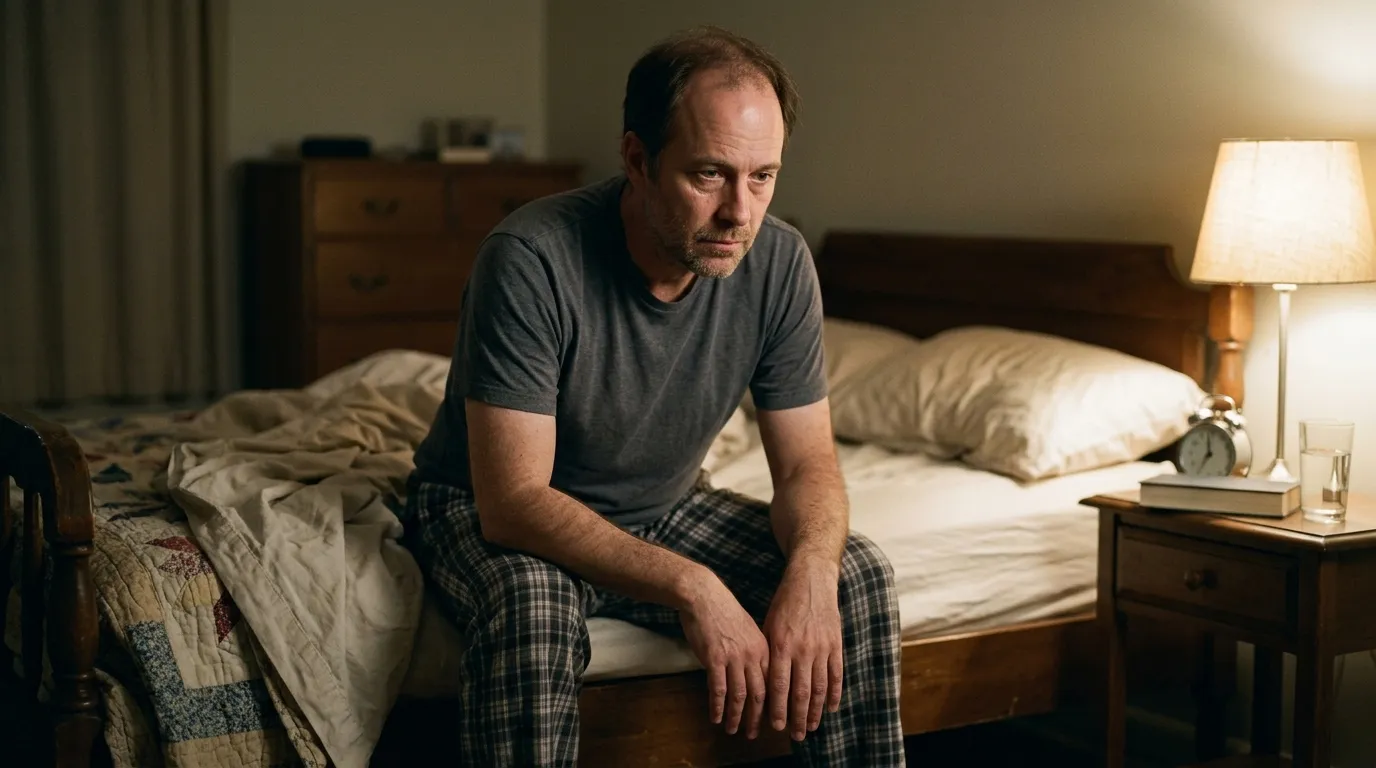
The clinical picture of testosterone decline varies, but several symptoms appear consistently in research and clinical practice. Recognizing these patterns is an important step toward getting help. The symptoms of low testosterone linked to natural testosterone decline by age often develop so gradually that men attribute them simply to "getting older" — which is exactly why so many cases go unaddressed for years.
Common symptoms include:
- Fatigue and low energy — persistent tiredness even with adequate sleep
- Reduced libido — decreased interest in sex, which is one of the most consistent early markers; see our article on TRT for low libido
- Mood changes — increased irritability, low motivation, or mild depression; low T is closely linked to motivation loss
- Changes in body composition — loss of muscle mass, increased body fat particularly around the abdomen; read more about low testosterone and weight gain
- Cognitive changes — difficulty concentrating, brain fog, or memory issues
- Reduced bone density — increased fracture risk over time
- Sleep disturbances — difficulty falling or staying asleep
- Erectile dysfunction — particularly reduced morning erections and difficulty maintaining arousal
Some men are surprised to experience hot flashes — yes, men can experience these too when testosterone drops significantly. If you're unsure whether your symptoms add up, take the free Low T symptom quiz to get a clearer picture in minutes.
For a more detailed breakdown, see our guide on low testosterone symptoms after 40 and what's actually normal.
When Does Normal Aging Become a Medical Concern?
This is one of the most important questions in men's hormone health. Not every man with declining testosterone levels needs treatment — but some do, and identifying that threshold correctly makes a real difference in quality of life.
The Endocrine Society's clinical guidelines indicate that treatment is appropriate when a man has both confirmed low testosterone levels (typically below 300 ng/dL on two separate morning tests) and symptoms that are affecting quality of life. However, experienced clinicians increasingly recognize that the symptom picture often matters more than any single threshold number.
Factors That Influence the Decision to Treat
- Symptom severity — how much is low T affecting daily life?
- Lab confirmation — has low testosterone been confirmed with morning blood tests? See our guide on which blood tests you need before and during TRT
- Free testosterone levels — total testosterone may look normal while free T is low
- Ruling out secondary causes — thyroid issues, sleep apnea, obesity, and medication side effects can all suppress testosterone
- Patient goals and preferences — including fertility considerations, since TRT suppresses sperm production
If you're unsure where to start, a consultation with a qualified TRT provider is the most straightforward path. You can find a TRT clinic near you through our directory, with options across every state. If you're in the Southern US, there are excellent options to explore — from TRT clinics in Texas to TRT clinics in Florida.
Lifestyle Strategies to Support Healthy Testosterone Levels
Before jumping to treatment — or alongside it — evidence-based lifestyle interventions can meaningfully support testosterone production in aging men. These aren't replacements for medical treatment when it's needed, but they represent a powerful foundation.
Resistance Training
Multiple studies confirm that regular resistance training — particularly compound movements like squats, deadlifts, and presses — acutely raises testosterone and may help preserve levels over time. Men who maintain regular strength training in their 40s and 50s consistently show better hormonal profiles than sedentary peers. Aim for at least three sessions per week.
Optimizing Sleep
Testosterone is produced primarily during sleep, with the largest pulses occurring during deep REM cycles. Research shows that men who sleep fewer than five hours per night have testosterone levels roughly 10 to 15 percent lower than men sleeping seven to nine hours. Prioritizing sleep quality is arguably the highest-return lifestyle intervention for testosterone. Our article on TRT and sleep explores this relationship in depth.
Managing Body Weight and Stress
Excess body fat, particularly visceral fat, increases estrogen conversion and suppresses testosterone. Research suggests that losing as little as 10 percent of body weight in overweight men can produce clinically meaningful testosterone increases. Chronic psychological stress and elevated cortisol directly inhibit testosterone synthesis through the hypothalamic-pituitary axis. Stress management — whether through mindfulness, reduced workload, or other means — is underrated as a hormonal health strategy.
Nutrition
Adequate dietary fat is essential for testosterone production, since cholesterol is the raw material from which testosterone is synthesized. Men on very low-fat diets often show suppressed testosterone. Zinc and vitamin D deficiencies are both associated with lower testosterone, and correcting them when deficient can improve levels. For a comprehensive approach, see our guide on how to increase testosterone naturally before considering TRT.
When Lifestyle Isn't Enough: Understanding TRT
For men whose testosterone has declined to symptomatic levels despite a healthy lifestyle, testosterone replacement therapy is an established, FDA-recognized treatment option. It's important to understand that TRT isn't a shortcut or a bodybuilding drug — it's a medically supervised hormone replacement protocol, not unlike thyroid hormone replacement for hypothyroidism.
TRT works by restoring testosterone levels to the normal physiological range, typically targeting 500 to 900 ng/dL. When administered correctly and monitored appropriately, it can meaningfully improve energy, mood, libido, body composition, bone density, and cognitive function in men with clinically low testosterone.
TRT Delivery Options
Modern TRT offers multiple delivery formats, each with different advantages:
- Injections — typically testosterone cypionate or enanthate, given weekly or twice weekly; cost-effective and highly controllable. Compare options: TRT injections vs gel
- Topical gels and creams — applied daily, produce steady levels; convenient for some men
- Patches — worn on the skin; compare these formats at TRT gel vs patches
- Pellets — implanted under the skin every 3–6 months; low-maintenance
- Nasal gel — newer option with no transfer risk
Each delivery method has its own profile of benefits and considerations. The right choice depends on your lifestyle, preferences, and what your provider recommends. If you're new to all of this, our guide on what TRT is and how it works is an excellent starting point.
What to Expect During Treatment
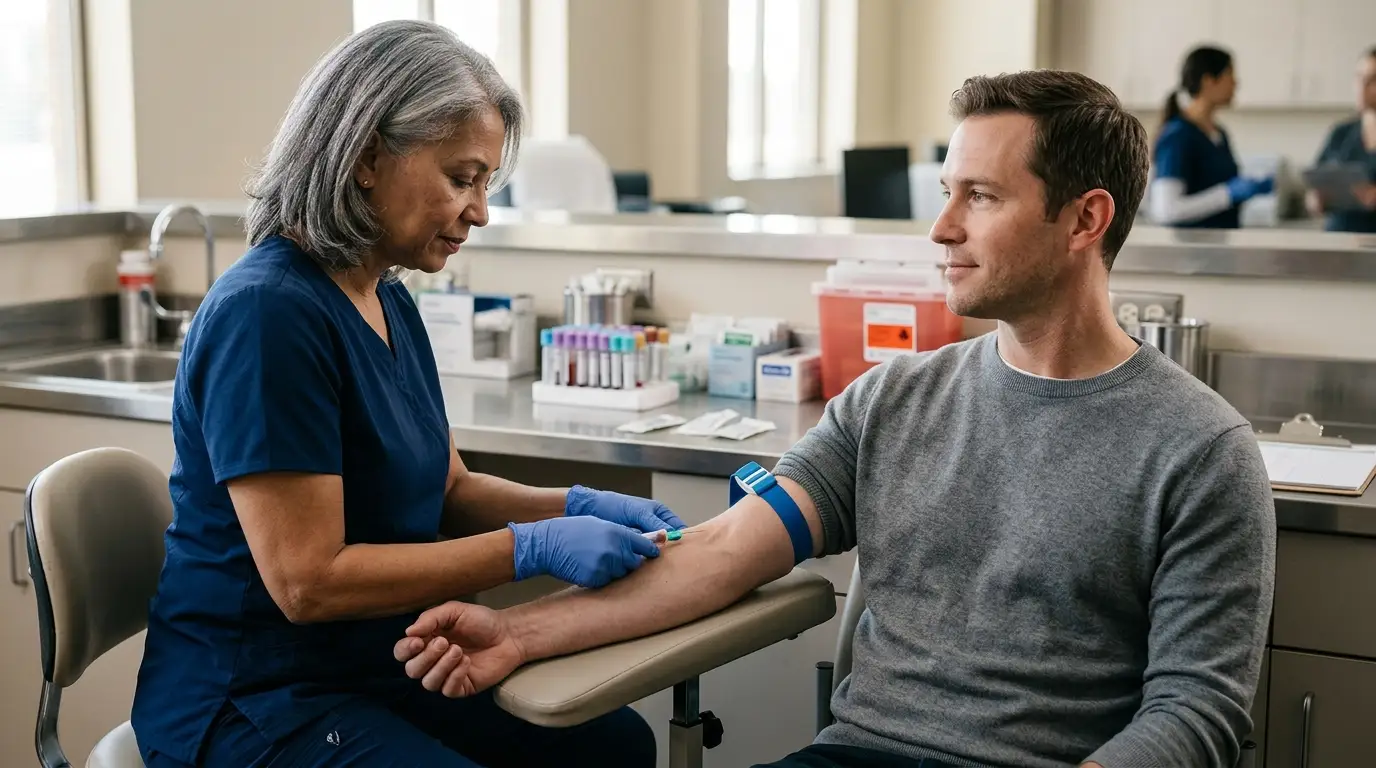
TRT is a monitored medical protocol. Before starting, your provider will conduct baseline bloodwork including total and free testosterone, LH, FSH, estradiol, hematocrit, PSA, and metabolic panels. During treatment, levels are checked regularly to ensure you're in the therapeutic range and that markers like hematocrit and estradiol remain balanced. Understanding your TRT lab results makes it much easier to have productive conversations with your provider.
Many men begin noticing improvements in energy and mood within the first four to six weeks. Libido often improves within three to six weeks, while changes in body composition may take three to six months to become apparent. For a realistic timeline, see our article on how long TRT takes to work.
Safety, Monitoring, and Managing Concerns
A well-run TRT protocol is safe for the vast majority of men when properly monitored. That said, understanding the considerations involved helps you make an informed decision and have productive conversations with your provider.
One concern sometimes raised is cardiovascular health. A landmark 2023 study — the TRAVERSE trial, published in the New England Journal of Medicine — followed over 5,000 men on TRT for nearly three years and found no increase in major cardiovascular events compared to placebo. This represents the strongest evidence yet that TRT, used appropriately, does not raise cardiovascular risk in men with low testosterone. For a deeper dive, see TRT and heart health: what the research shows.
Hematocrit (red blood cell concentration) can rise with TRT in some men. This is monitored through regular blood tests and is manageable through dose adjustment or blood donation when needed. Learn why hematocrit matters on TRT.
Regarding prostate health: current evidence does not support a causal link between TRT and prostate cancer development. Men on TRT are monitored with regular PSA tests, and the therapy is not indicated in men with active prostate cancer. Read the full evidence summary at TRT and prostate cancer: what the research really shows.
For a comprehensive review of what to expect and how concerns are managed, see is TRT safe? Heart, prostate, and long-term health risks explained. The key takeaway is that TRT is a managed medical treatment — your provider screens for risk factors, monitors your labs regularly, and adjusts your protocol as needed. Side effects that do occur are typically addressable.
Taking Action: What to Do If You Recognize These Signs
Understanding the natural testosterone decline age brings is empowering — because it means there are clear, evidence-based steps you can take. You don't have to accept fatigue, reduced drive, and changing body composition as inevitable features of getting older. For many men, these are treatable symptoms with a clear biological cause.
Here's a practical roadmap:
- Assess your symptoms honestly. Take the free Low T symptom quiz to get a structured view of what you're experiencing.
- Get proper lab work. A single testosterone reading isn't enough — you need morning tests, ideally on two separate occasions, along with free testosterone, SHBG, and other markers. See how to get diagnosed with low testosterone.
- Consult a qualified TRT provider. Not all physicians are equally experienced with hormone optimization. A specialist will interpret your full clinical picture, not just chase a single number. Find a TRT clinic near you through our directory.
- Optimize lifestyle in parallel. Whether you pursue TRT or not, the lifestyle foundations — sleep, exercise, nutrition, stress management — support your hormonal health at every age.
- Make an informed decision with your provider. TRT is not right for everyone, and a good provider will tell you honestly if lifestyle changes or other interventions are the better first step. See TRT vs lifestyle changes: when do you need therapy?
The research on natural testosterone decline age consistently shows that this is a manageable, well-understood process. Men who engage with the medical system early — get tested, understand their numbers, and work with qualified providers — consistently report better outcomes than those who wait until symptoms become severe. There's never been a better time to take that first step.
Sources & References
- Testosterone Therapy in Men with Hypogonadism: An Endocrine Society Clinical Practice Guideline — Journal of Clinical Endocrinology & Metabolism [Link]
- Age-Associated Changes in Hypothalamic-Pituitary-Testicular Function in Middle-Aged and Older Men — PubMed / Journal of Clinical Endocrinology & Metabolism [Link]
- Cardiovascular Safety of Testosterone-Replacement Therapy (TRAVERSE Trial) — New England Journal of Medicine [Link]
- Testosterone and Aging: Clinical Research Directions — PubMed / Journal of the American Medical Association [Link]
- Low Testosterone (Male Hypogonadism) — Overview — Cleveland Clinic [Link]
- Testosterone Deficiency — Diagnosis and Treatment — Mayo Clinic [Link]
- The Massachusetts Male Aging Study: Sexual Dysfunction in Men 40–70 Years — PubMed / Journal of Urology [Link]
Frequently Asked Questions
Ready to Take the Next Step?
Check your symptoms with our free quiz or browse 2,500+ verified TRT clinics.