
Medical Disclaimer
The information on this website is for educational purposes only and is not a substitute for professional medical advice, diagnosis, or treatment. Always consult a qualified healthcare provider before starting any hormone therapy. Individual results may vary. TRTscout does not provide medical services or prescribe medications.
Key Takeaways
- Total testosterone is the most recognized TRT marker, but free testosterone and SHBG often tell a more complete story about how much is actually available to your body.
- Estradiol (E2) is essential for male health — the goal on TRT is to keep it balanced, not eliminate it. Both high and low estradiol cause problems.
- Hematocrit must be monitored on TRT because testosterone increases red blood cell production; levels above 54% typically prompt dose adjustment or therapeutic phlebotomy.
- PSA testing is a routine safety screen on TRT, but current evidence does not support a causal link between TRT and prostate cancer when proper screening is performed.
- Lab trends over time are more meaningful than any single result — consistent monitoring every three to six months is the standard of care for men on TRT.
- The timing of your blood draw relative to your injection or dose matters significantly — always coordinate with your provider to ensure draws are taken at a consistent point in your cycle.
Why Your Lab Results Matter on TRT
If you've recently started testosterone replacement therapy — or you're considering it — you've probably encountered a stack of lab results that look more like a foreign language than a health report. Getting your trt lab results explained in plain, actionable terms is one of the most empowering things you can do as a patient. These numbers are not just bureaucratic checkboxes; they are a real-time snapshot of how your body is responding to treatment.
Important disclaimer: This article is for educational purposes only and does not constitute medical advice. Always consult a qualified healthcare provider before starting, changing, or stopping any treatment.
Lab monitoring is a cornerstone of responsible TRT. The Endocrine Society and the American Urological Association both recommend baseline bloodwork before starting therapy, with follow-up panels at regular intervals — typically every three to six months once you're stable. If you haven't had comprehensive bloodwork yet, our guide to TRT blood work: which tests you need before and during treatment is a great starting point.
Think of your lab panel as a feedback loop. Your provider uses these numbers to fine-tune your dose, catch any changes early, and confirm that therapy is delivering the intended benefits. You shouldn't need a medical degree to understand what's going on — and after reading this guide, you won't.
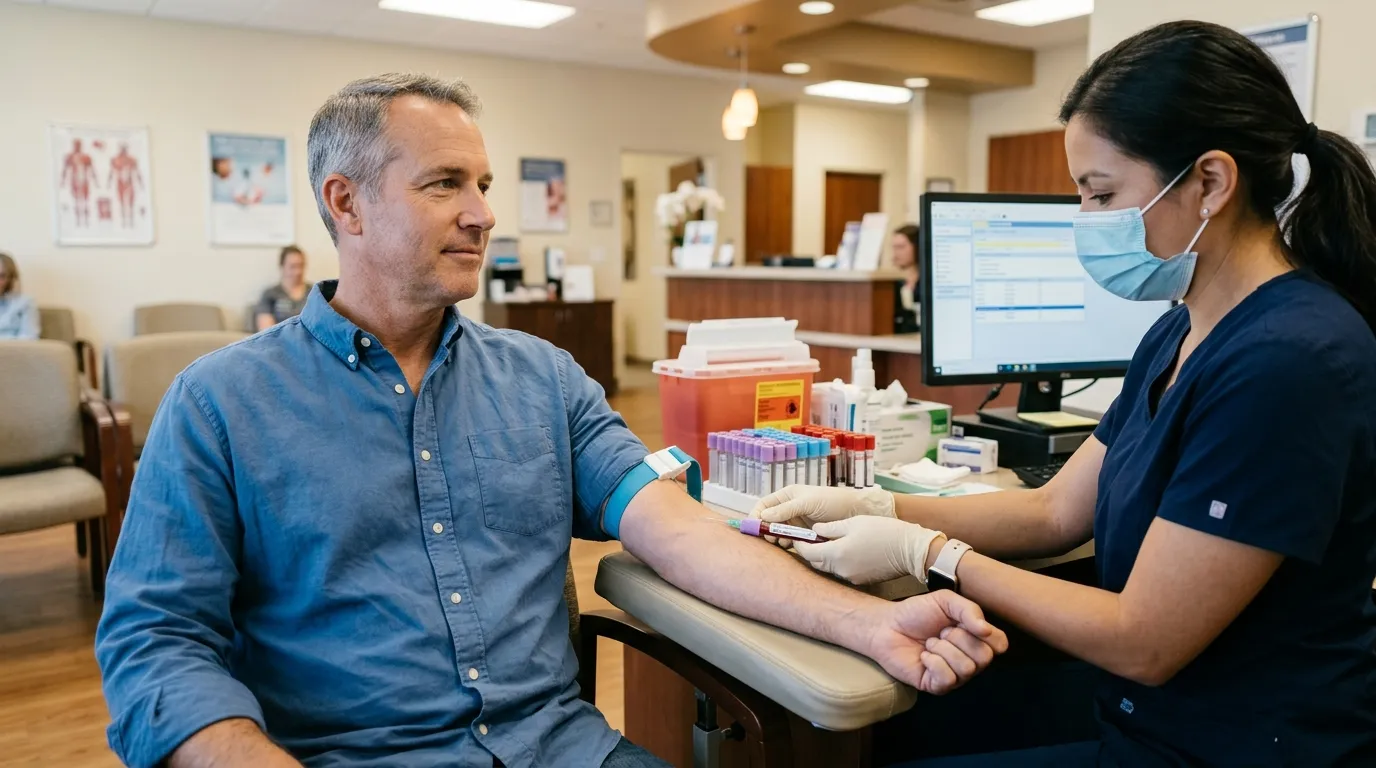
Total Testosterone: The Number Everyone Focuses On
Total testosterone is the first number most men look for, and for good reason — it tells you the overall concentration of testosterone circulating in your blood. It's measured in nanograms per deciliter (ng/dL), and the conventional reference range for adult men sits between roughly 300 and 1,000 ng/dL. However, these ranges vary slightly between laboratories, so always reference the range printed on your own report.
Before starting TRT, most guidelines — including those from the Endocrine Society — define clinically low testosterone as a total level consistently below 300 ng/dL, combined with symptoms. Symptoms matter just as much as the number itself. A man at 280 ng/dL who feels great may not need treatment, while a man at 320 ng/dL experiencing fatigue, low libido, and brain fog might be a strong candidate.
On TRT, most providers aim to bring total testosterone into the mid-to-upper normal physiological range — typically 500 to 900 ng/dL. Going significantly above 1,000 ng/dL on a sustained basis generally isn't the goal of standard TRT, and a good provider will adjust your dose if levels run too high. For a deeper look at what optimal numbers look like during therapy, see our article on optimal testosterone levels on TRT: what to aim for.
One critical detail: the timing of your blood draw matters enormously. Testosterone levels fluctuate throughout the day, peaking in the morning and declining through the afternoon. If you're on injections, the timing relative to your last injection also shifts your result significantly. Ask your provider whether they want a trough level (drawn just before your next injection) or a mid-point level for the most meaningful comparison. Our article on TRT peak and trough explains this in detail.
Free Testosterone and SHBG: What's Actually Available to Your Cells
Total testosterone tells only part of the story. Much of the testosterone in your blood is bound to proteins — primarily sex hormone-binding globulin (SHBG) and albumin — and is essentially unavailable for your cells to use. Free testosterone is the unbound fraction that can actually enter cells and exert biological effects. It typically represents just 1 to 4 percent of total testosterone.
Two men can have the same total testosterone level but feel completely different based on their SHBG levels. A man with high SHBG will have more testosterone bound up and unavailable, meaning his effective free testosterone could be quite low even if his total looks acceptable. This is why many knowledgeable TRT providers place as much — or more — emphasis on free testosterone as on total testosterone.
Normal free testosterone ranges vary by age and lab methodology, but a commonly cited reference range for men is approximately 9 to 30 ng/dL (or 50 to 210 pmol/L depending on the unit used). If your free testosterone is low despite adequate total levels, your provider may adjust your protocol or address factors that elevate SHBG (such as thyroid dysfunction or certain medications).
For a full breakdown of how these two measurements interact, see our dedicated article on free vs total testosterone: what really matters and our primer on what SHBG is and why it matters for TRT.
TRT Lab Results Explained: Estradiol (E2) and Why It Matters
Estradiol — the primary form of estrogen in men — is one of the most misunderstood markers in testosterone therapy. Many men are surprised to learn that some estrogen is not only normal but essential for male health. Estradiol plays critical roles in bone density, cardiovascular function, cognitive health, libido, and joint comfort. The goal on TRT is not to eliminate estrogen but to keep it in a healthy range.
In men, the standard reference range for estradiol (measured as E2) is roughly 10 to 40 pg/mL when using a sensitive LC-MS/MS assay — the gold standard for male estrogen testing. Some labs use standard immunoassay methods designed for women, which are less accurate for men, so make sure your provider orders the right test.
Testosterone naturally converts to estradiol through a process called aromatization, catalyzed by the aromatase enzyme. When you're on TRT and your testosterone levels rise, estradiol tends to rise proportionally. This is normal. Problems can arise in some men — particularly those with higher body fat, which contains more aromatase — if estradiol climbs excessively and symptoms develop. These can include water retention, mood changes, or breast tenderness.
On the other end, crashing estradiol by over-using aromatase inhibitors is equally problematic and can cause joint pain, low libido, and mood disturbances. A skilled provider takes a measured approach. To learn more about managing this balance, see our articles on estradiol in men on TRT, high estrogen on TRT: symptoms and how to fix it, and anastrozole on TRT: when you need an estrogen blocker.

Hematocrit and Red Blood Cell Count: The Safety Markers
Hematocrit measures the percentage of your blood volume made up of red blood cells. It's one of the most important safety markers to monitor on TRT because testosterone stimulates red blood cell production through erythropoiesis. For most healthy men, a hematocrit between 38% and 50% is normal. On TRT, levels can rise — and when hematocrit climbs above 54%, some guidelines recommend pausing or adjusting therapy.
Elevated hematocrit — a condition called erythrocytosis — increases blood viscosity, which can theoretically raise the risk of certain cardiovascular events in susceptible individuals. However, it's worth emphasizing that this is a well-understood and actively managed aspect of TRT, not an unpredictable hazard. Your provider will monitor this marker routinely and has clear protocols if levels trend upward.
Management options for elevated hematocrit include dose reduction, switching to a different delivery method, increasing hydration, or therapeutic phlebotomy (essentially donating blood). Many men on TRT become regular blood donors, which serves a dual purpose. See our article on hematocrit and TRT: why your levels matter and TRT and blood donation: why it's important for practical guidance.
Key Hematocrit Reference Points on TRT
| Hematocrit Level | Interpretation | Typical Action |
|---|---|---|
| 38–50% | Normal range | Continue current protocol |
| 50–54% | Mildly elevated | Increase monitoring frequency |
| Above 54% | Elevated — intervention warranted | Dose adjustment or phlebotomy |
PSA (Prostate-Specific Antigen): What TRT Actually Does to This Number
Prostate-specific antigen, or PSA, is a protein produced by the prostate gland. PSA testing is a standard part of TRT monitoring because testosterone does influence prostate tissue. The normal range is generally below 4.0 ng/mL for most men, though age-adjusted thresholds apply — younger men are held to a tighter standard.
When men start TRT, a modest rise in PSA — sometimes 0.5 to 1.0 ng/mL — can occur in the first few months as the prostate responds to restored hormonal signaling. This is generally considered a benign adjustment, not a cause for alarm. A large, sudden rise in PSA, however, warrants further evaluation regardless of TRT status.
Current evidence does not support the claim that TRT causes prostate cancer. A landmark 2023 randomized controlled trial published in the New England Journal of Medicine (the TRAVERSE trial) found no significant increase in prostate cancer incidence among men treated with testosterone compared to placebo. However, TRT is generally not initiated in men with known or suspected active prostate cancer until they have been fully evaluated and treated. This is a critical screening step your provider will handle before prescribing.
For a thorough review of the evidence, see our articles on TRT and PSA levels: should you be worried and TRT and prostate cancer: what the research really shows.
LH, FSH, and the Hypothalamic-Pituitary Axis
Luteinizing hormone (LH) and follicle-stimulating hormone (FSH) are pituitary hormones that normally drive the testes to produce testosterone and sperm. Before starting TRT, your provider will likely measure these as part of diagnosing the type of hypogonadism you have — primary (testes can't produce enough) versus secondary (the brain isn't sending the right signals).
Once you're on TRT, these levels will be suppressed — essentially zero, or close to it. This is expected and completely normal. Exogenous testosterone signals the brain that production is adequate, so LH and FSH naturally drop. This is also why TRT suppresses fertility: without LH and FSH signaling, the testes stop producing sperm. For men who want to preserve fertility, this is an important conversation to have with your provider before starting. Our article on TRT and fertility: can you have kids on testosterone covers your options in detail, as does our guide to HCG and TRT: why doctors prescribe them together.
Checking LH and FSH on treatment isn't clinically useful for dose management, but they remain important in the diagnostic workup and in situations where someone is transitioning off TRT. Our dedicated guide to LH and FSH explained: what they mean for TRT provides a comprehensive overview.
Complete Blood Count, Metabolic Panel, and Lipids
A comprehensive TRT monitoring panel goes beyond hormones. A complete blood count (CBC) captures red blood cells, white blood cells, and platelets — the CBC is where hematocrit and hemoglobin appear. A comprehensive metabolic panel (CMP) checks kidney function, liver enzymes, electrolytes, and blood glucose, giving your provider a broader picture of how your body is handling therapy.
Liver enzymes (AST and ALT) are worth watching, particularly if you're using oral testosterone formulations like Jatenzo or Kyzatrex, which undergo hepatic first-pass metabolism. Injectable and topical forms of testosterone do not significantly stress the liver for most men.
Lipid panels — measuring total cholesterol, LDL, HDL, and triglycerides — are another key component. TRT can modestly affect cholesterol profiles, typically with some reduction in HDL (good cholesterol) in some men. However, improvements in body composition, reduced inflammation, and better insulin sensitivity that come with properly managed TRT can work in the opposite direction. The net effect tends to be neutral to mildly positive in most published studies, but it's worth tracking. See our deep dive on TRT and cholesterol: how testosterone affects your lipids for more context.
Blood glucose and HbA1c are also relevant, particularly as research shows testosterone plays a meaningful role in insulin sensitivity. Men with metabolic syndrome or type 2 diabetes may see improvements in blood sugar control on TRT. Our article on TRT and diabetes: how testosterone affects blood sugar explores this connection.

Understanding Your Lab Trends Over Time
One of the most important things to understand about TRT lab results explained correctly is that a single snapshot is rarely definitive. Trends over time are far more informative than any individual data point. A testosterone level of 650 ng/dL at month three that was 280 ng/dL at baseline tells a compelling story of therapeutic success. A PSA that jumped 1.5 ng/mL in six months warrants investigation even if the absolute number is still technically within range.
Most stable TRT patients have labs drawn every six months once their protocol is optimized. During the titration phase — typically the first six to twelve months — quarterly labs are standard. Your provider uses these check-ins to confirm that you're in the right hormonal range and that safety markers remain within acceptable limits. If you're not seeing results or feel something is off, labs are the objective tool that guides protocol changes. Our article on why your TRT isn't working and our guide to testosterone dosage adjustment: when and why to change explain how providers use these numbers to optimize your protocol.
Keeping a personal log of your lab results — including the date, the lab method used, and the timing of the draw relative to your dose — gives you and your provider a much clearer picture. Many men find that small lifestyle factors like alcohol consumption, poor sleep, or significant weight changes can meaningfully shift their numbers. Our article on TRT and alcohol and the connection between TRT and sleep offer useful context here.
Taking the Next Step: Finding a Provider Who Monitors You Properly
Having your trt lab results explained by a knowledgeable provider is not optional — it is the foundation of safe, effective therapy. Unfortunately, not all providers are equally thorough in their monitoring approach. The best TRT clinics run comprehensive panels, explain results in plain language, and adjust protocols based on data rather than guesswork.
If you're still in the early stages of figuring out whether TRT is right for you, the single best first step is an honest assessment of your symptoms alongside proper bloodwork. You can take the free Low T symptom quiz to get a clearer picture of whether your symptoms align with low testosterone — then bring those results to a qualified provider.
Whether you're just starting out or looking to optimize an existing protocol, working with a clinic that prioritizes thorough trt lab results explained in context — not just normal vs. abnormal flags — will make the biggest difference in your outcomes. Our guides to your first TRT consultation: what to expect and how to find a TRT doctor can help you prepare for that conversation. Ready to find a provider near you? Find a TRT clinic near you using our directory and connect with a qualified specialist who will use your lab data to personalize your care.
Understanding your numbers is the bridge between feeling frustrated and feeling in control. With the right provider interpreting your results, TRT can be a well-managed, evidence-based therapy that genuinely improves your quality of life — and the labs are what make that precision possible.
Sources & References
- Testosterone Therapy in Men with Hypogonadism: An Endocrine Society Clinical Practice Guideline — Journal of Clinical Endocrinology & Metabolism [Link]
- Cardiovascular Safety of Testosterone-Replacement Therapy (TRAVERSE Trial) — New England Journal of Medicine [Link]
- Evaluation and Management of Testosterone Deficiency: AUA Guideline — American Urological Association [Link]
- Testosterone and the Prostate: Clinical Implications — PubMed / National Library of Medicine [Link]
- Erythrocytosis and Testosterone Therapy: A Review — PubMed / National Library of Medicine [Link]
- Estradiol in Men: Measurement, Physiology, and Clinical Significance — PubMed / National Library of Medicine [Link]
- Sex Hormone-Binding Globulin and Free Testosterone in Men — Mayo Clinic [Link]
Frequently Asked Questions
Ready to Take the Next Step?
Check your symptoms with our free quiz or browse 2,500+ verified TRT clinics.