Medical Disclaimer
The information on this website is for educational purposes only and is not a substitute for professional medical advice, diagnosis, or treatment. Always consult a qualified healthcare provider before starting any hormone therapy. Individual results may vary. TRTscout does not provide medical services or prescribe medications.
Key Takeaways
- Hot flashes in men are a clinically recognized symptom of low testosterone, caused by hypothalamic thermoregulatory dysfunction when androgen levels fall below normal range.
- Approximately 40% of men with confirmed hypogonadism report hot flashes or night sweats, and rates exceed 80% in men undergoing androgen deprivation therapy.
- Low testosterone hot flashes in men rarely appear alone — they typically accompany fatigue, poor sleep, reduced libido, mood changes, and loss of muscle mass.
- Diagnosis requires a comprehensive hormone panel including total testosterone, free testosterone, LH, FSH, estradiol, and SHBG, ideally tested on two separate mornings.
- Testosterone replacement therapy is the most direct and effective treatment, with most men experiencing significant reduction in hot flash frequency within 4–8 weeks.
- Lifestyle factors including sleep quality, resistance training, diet, and stress management meaningfully support TRT outcomes and hormonal balance.
Why Men Get Hot Flashes (And What It Really Means)
When most people hear "hot flashes," they think of menopause. But low testosterone hot flashes in men are a well-documented, clinically recognized symptom that affects a significant number of men — particularly those over 40. If you've been waking up soaked in sweat, or suddenly feeling waves of heat rush over you during the day for no obvious reason, your hormones may be telling you something important.
Disclaimer: This article is for educational purposes only and does not constitute medical advice. Always consult a qualified healthcare provider before starting or changing any treatment.
Testosterone is the primary male sex hormone, and it plays a far broader role in your body than most men realize. It regulates body temperature, mood, energy, sleep quality, and even cardiovascular function. When levels drop — whether due to aging, a medical condition, or other factors — the body's thermoregulatory system can become dysregulated, producing the same uncomfortable heat episodes women experience during menopause. The condition is sometimes called "andropause" or male hypogonadism, and it's more common than you might expect. Studies suggest that testosterone levels decline by roughly 1–2% per year after age 30, meaning millions of men are experiencing suboptimal levels without knowing it.
If you're noticing unexplained heat episodes, night sweats, fatigue, or mood changes, it's worth exploring whether low T could be the root cause. Understanding the connection between testosterone and thermoregulation is the first step toward getting real answers — and real relief.
Understanding Low Testosterone Hot Flashes in Men: The Science
Hot flashes occur when the hypothalamus — the brain's temperature control center — misfires and interprets a normal body temperature as too hot. In response, it triggers a cascade of cooling mechanisms: blood vessels near the skin dilate, heart rate increases, and sweat glands activate. The result is that familiar rush of heat, flushing, and perspiration, often followed by a chill as the body overcorrects.
In women, declining estrogen is the primary trigger for this hypothalamic dysregulation during menopause. In men, the mechanism is similar but driven primarily by falling testosterone levels. Research published in journals such as The Journal of Clinical Endocrinology and Metabolism has confirmed that hypogonadal men — those with clinically low testosterone — report vasomotor symptoms including hot flashes at rates comparable to menopausal women undergoing hormone withdrawal.
One key study found that approximately 40% of men with confirmed hypogonadism reported hot flashes or night sweats as part of their symptom profile. Another notable context is men undergoing androgen deprivation therapy (ADT) for prostate cancer, where testosterone is intentionally suppressed to very low levels. In these patients, hot flash rates exceed 80%, which powerfully illustrates the direct hormonal link between low T and thermal dysregulation in men.
The hypothalamus is sensitive to even modest changes in circulating androgens. When testosterone drops below the normal range — generally considered below 300 ng/dL by most clinical guidelines — the hypothalamus loses some of its regulatory stability, and body temperature perception becomes erratic. This isn't a mystery; it's a predictable physiological response to hormonal imbalance that is well understood in the medical literature.
Understanding this mechanism matters because it means hot flashes in men aren't random or psychosomatic — they have a measurable, treatable cause. If you're curious about how your testosterone levels compare, you can explore testosterone levels by age with this full chart and explanation to get a clearer picture of what's normal for your age group.
Common Symptoms That Accompany Male Hot Flashes
Hot flashes rarely show up in isolation. When low testosterone is the underlying cause, most men experience a cluster of symptoms that collectively paint a clear hormonal picture. Recognizing the full pattern helps you and your doctor make a faster, more accurate diagnosis.
Vasomotor Symptoms of Low Testosterone Hot Flashes Men Experience
The vasomotor symptoms — meaning those involving blood vessel dilation and heat regulation — are often the most disruptive. These include:
- Sudden waves of intense heat, typically affecting the face, neck, and chest
- Profuse sweating, often disproportionate to the ambient temperature or activity level
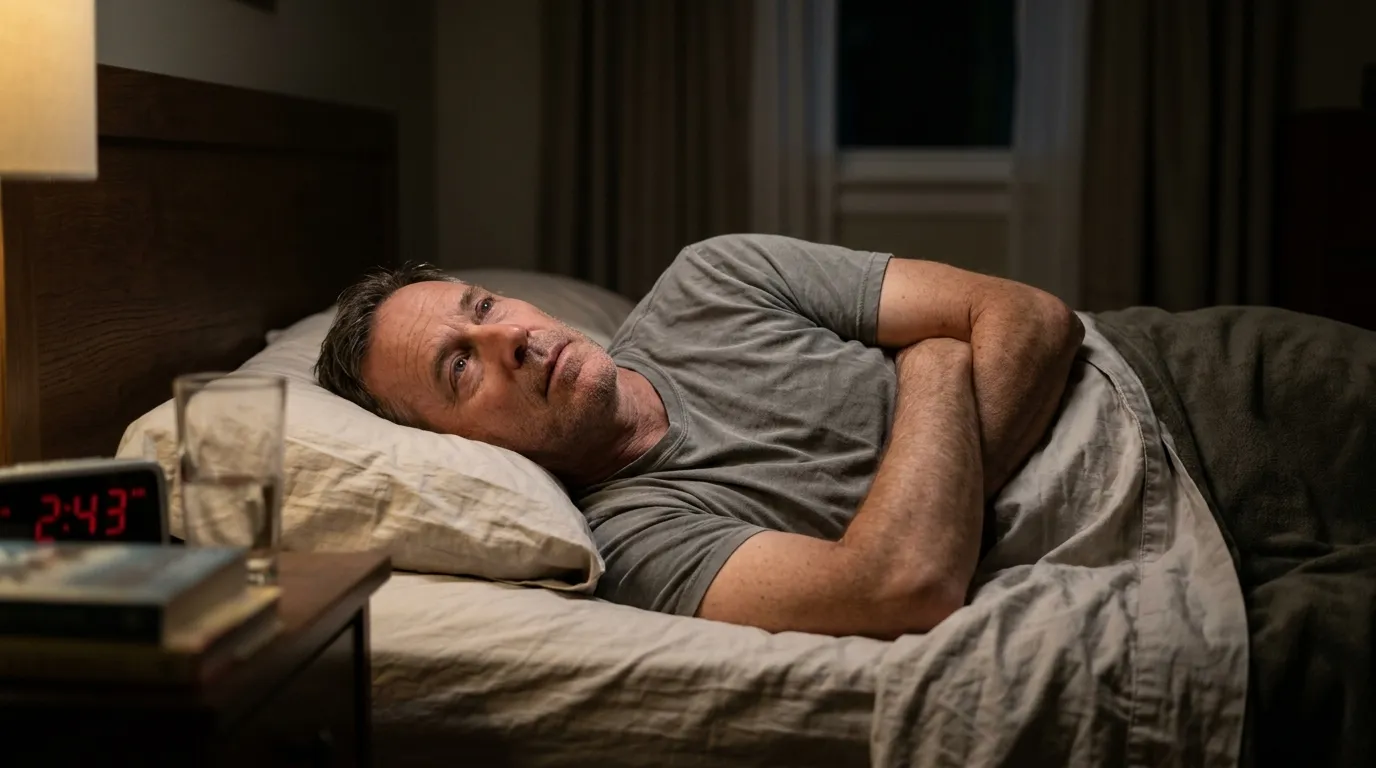
- Night sweats that disrupt sleep, sometimes requiring a change of clothes or bedding
- Flushed or reddened skin during an episode
- Heart palpitations accompanying the heat surge
- Chills or shivering immediately after the hot flash subsides
Beyond the thermal symptoms, most men with low testosterone also report broader hormonal symptoms. These may include reduced libido, difficulty achieving or maintaining erections, persistent fatigue, loss of muscle mass despite regular exercise, increased body fat (particularly around the abdomen), brain fog, irritability, and low mood. For a thorough review, see 10 signs of low testosterone in men.
Sleep disruption deserves special mention. Night sweats caused by low T create a vicious cycle: poor sleep further suppresses testosterone production (most testosterone is produced during deep sleep), which worsens the hormonal imbalance, which worsens the night sweats. Breaking this cycle is one of the key reasons men report dramatically improved sleep quality after beginning TRT. To learn more, read about TRT and sleep.
If you're experiencing several of these symptoms together, it's a strong signal worth investigating. Take the free Low T symptom quiz to assess your symptom profile and get a clearer sense of whether hormonal evaluation makes sense for you.
Who Is Most at Risk for Low T Hot Flashes?
While any man with low testosterone can experience hot flashes, certain groups are more likely to notice these symptoms. Knowing the risk factors helps contextualize your experience and can motivate earlier testing and intervention.
Age is the most significant risk factor. Testosterone declines gradually from the mid-30s onward, but the drop becomes more pronounced after 45–50. Men in this age range who haven't had their levels checked may be living with undiagnosed hypogonadism. The good news is that this is entirely addressable with proper care. See our guide on low testosterone symptoms after 40 for a detailed breakdown.
Men on androgen deprivation therapy for prostate cancer experience the most severe and frequent hot flashes due to near-total testosterone suppression. For these men, managing vasomotor symptoms becomes a major quality-of-life priority.
Men who have undergone orchiectomy (surgical removal of the testes) for any reason will have extremely low testosterone and are very likely to experience hot flashes without hormonal support.
Obesity and metabolic syndrome are associated with lower testosterone levels. Excess adipose (fat) tissue converts testosterone into estrogen via aromatization, reducing free testosterone and disrupting the hormonal balance that keeps the hypothalamus stable. If this sounds familiar, the connection between low testosterone and weight gain is worth reading about.
Chronic stress and poor sleep elevate cortisol, which directly suppresses testosterone production over time. Men with high-stress lifestyles and poor sleep habits may find themselves in a downward hormonal spiral. Identifying and understanding the causes of low testosterone is an important early step in finding the right solution.

How Low T Hot Flashes Are Diagnosed
Diagnosing the cause of hot flashes in men requires a methodical approach. A good provider won't jump to conclusions — they'll gather a complete symptom history and order targeted lab work to confirm the hormonal picture before recommending any treatment.
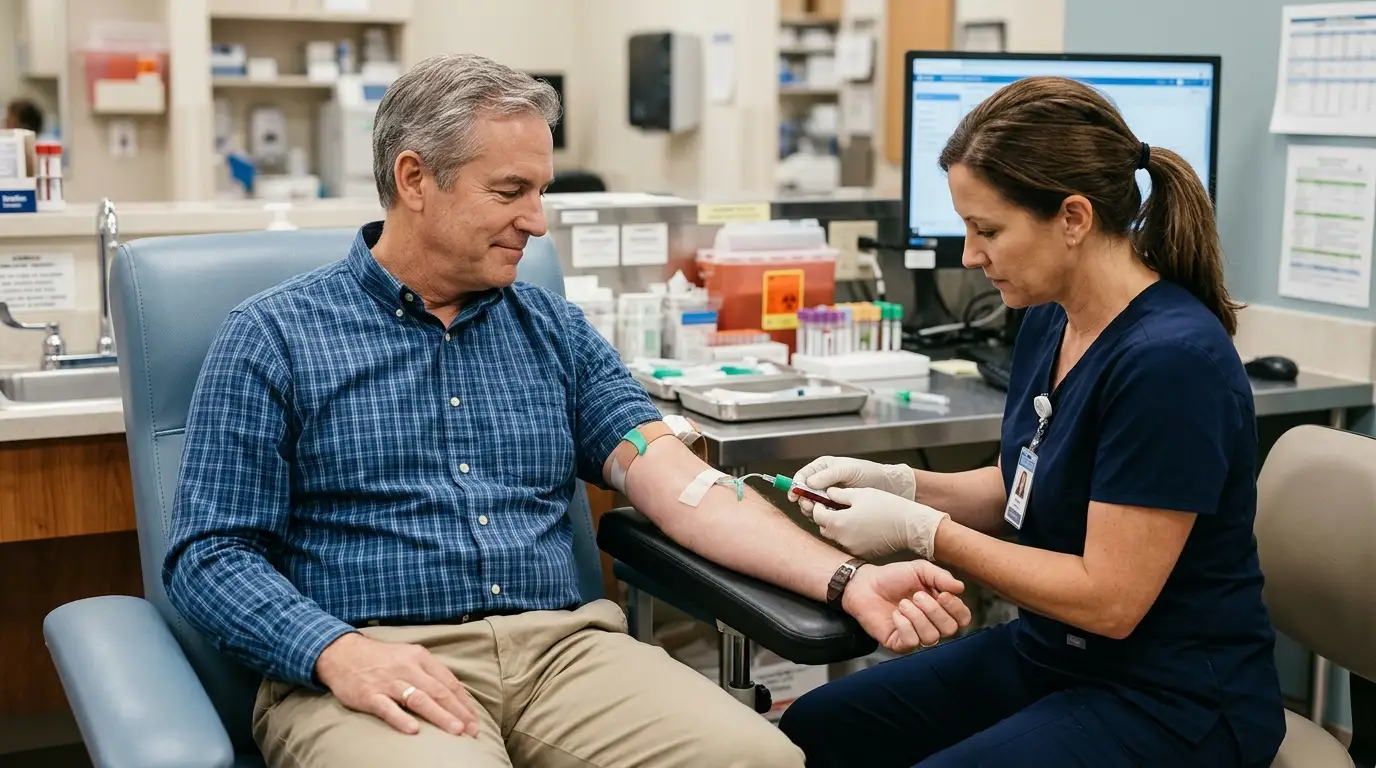
Key Blood Tests for Low Testosterone Hot Flashes in Men
The foundation of diagnosis is a comprehensive hormone panel. At minimum, this should include:
| Test | Why It Matters | Normal Range (approximate) |
|---|---|---|
| Total Testosterone | Overall testosterone production | 300–1000 ng/dL |
| Free Testosterone | Biologically active testosterone | 9–30 ng/dL |
| LH and FSH | Distinguish primary vs secondary hypogonadism | Varies by lab |
| Estradiol (E2) | Assess estrogen balance | 10–40 pg/mL in men |
| SHBG | Affects free testosterone availability | 10–57 nmol/L |
| Complete Blood Count | Baseline hematocrit before TRT | Varies |
| PSA | Prostate baseline before TRT | Under 4 ng/mL |
It's important to test in the morning (typically before 10 a.m.) when testosterone levels are at their daily peak, and ideally on two separate occasions to confirm consistently low readings. For a deeper dive into what these numbers mean, read our guide on TRT blood work: which tests you need.
Beyond lab work, a thorough provider will also assess your sleep quality, body composition, lifestyle factors, and any medications that might be suppressing testosterone. Some medications — including opioids, certain antidepressants, and glucocorticoids — are known to lower testosterone levels and can contribute to hot flashes in men. Getting the full picture ensures that treatment is targeted and effective rather than a guessing game. Learn about how to get diagnosed with low testosterone to understand the full process from start to finish.
Treatment Options: How TRT Addresses Hot Flashes in Men
Once low testosterone is confirmed as the cause of your hot flashes, testosterone replacement therapy is the most direct and effective treatment available. By restoring testosterone to a healthy physiological range, TRT re-stabilizes the hypothalamic thermostat and eliminates or dramatically reduces vasomotor symptoms in most men.
Clinical evidence supports this outcome. Studies on men with hypogonadism receiving TRT have consistently shown reductions in hot flash frequency and severity, along with improvements in sleep, mood, energy, and sexual function. For men on androgen deprivation therapy where TRT is not an option, alternative approaches such as low-dose antidepressants or gabapentin have shown some efficacy, but these are secondary options for specific clinical situations.
For most men with garden-variety low testosterone and bothersome hot flashes, TRT is a straightforward, well-established solution. The treatment comes in several forms, and the right choice depends on your lifestyle, preferences, and clinical profile:
- Testosterone injections (cypionate or enanthate): Weekly or biweekly injections, highly effective and cost-efficient. See the comparison of TRT injections vs gel.
- Topical gels and creams: Applied daily to skin, convenient and easy to adjust dosing. Explore TRT gel vs patches to understand the differences.
- Testosterone pellets: Implanted subcutaneously every 3–6 months, providing stable long-term levels with minimal daily effort.
- Oral testosterone: Newer options like Jatenzo offer pill-based convenience without the liver concerns of older oral formulations.
Your provider will tailor the choice to your needs and monitor your progress with regular follow-up blood work. Most men begin to notice a reduction in hot flashes within the first 4–8 weeks of therapy, with continued improvement over the following months. For a realistic picture of what to expect, read about TRT before and after: real results explained.
What to Expect During TRT: Managing the Transition
Starting TRT is not a single event — it's the beginning of an ongoing therapeutic relationship with your provider. Understanding what to expect helps you navigate the early weeks with confidence rather than uncertainty.
In the first few weeks, many men notice improvements in energy and sleep quality, which are often the earliest indicators that testosterone levels are rising toward the therapeutic range. Hot flash frequency may begin to decrease within 2–4 weeks for some men, though full stabilization of vasomotor symptoms often takes 2–3 months as hormone levels reach a steady state.
Your provider will schedule follow-up blood work at around 6–8 weeks to assess your response and make any necessary adjustments. Key parameters being monitored include total and free testosterone, estradiol, hematocrit, and PSA. This regular monitoring is what makes TRT safe and effective — it's not a set-it-and-forget-it treatment, but a carefully managed therapy. Understand the reasoning behind testosterone dosage adjustments so you know what your provider is looking for.
Some men experience a temporary increase in estradiol as testosterone is converted (aromatized) to estrogen, which can actually cause its own vasomotor or mood-related symptoms. This is manageable — your provider may prescribe a low-dose aromatase inhibitor if needed. Learn about anastrozole on TRT and when it's appropriate. The key message here is that any adjustment needed along the way is a normal part of the process, not a sign that something has gone wrong.

Lifestyle Strategies That Support Hormonal Balance
While TRT directly addresses the hormonal root cause of hot flashes, lifestyle factors can meaningfully support or undermine your results. Adopting a few targeted habits alongside treatment can accelerate your improvement and help sustain long-term hormonal health.
Sleep optimization is arguably the most powerful non-medical lever you have. Since the majority of testosterone is synthesized during deep sleep stages, prioritizing 7–9 hours of quality sleep creates a powerful positive feedback loop with TRT. Avoiding screens before bed, keeping your bedroom cool and dark, and maintaining consistent sleep and wake times all support deeper, more restorative sleep cycles.
Resistance training consistently shows up in research as a natural testosterone booster and a complement to TRT. Compound movements — squats, deadlifts, bench press, rows — stimulate the greatest hormonal response. Aim for 3–4 sessions per week at moderate to high intensity for best results alongside your therapy.
Dietary adjustments matter more than most men realize. Diets rich in zinc (found in oysters, red meat, pumpkin seeds), vitamin D, and healthy fats (avocado, olive oil, fatty fish) support testosterone production. Conversely, excessive alcohol consumption, highly processed foods, and chronic caloric restriction can suppress testosterone levels. If you're managing weight alongside TRT, read about TRT and weight loss for a practical guide.
Stress management is chronically underrated in men's hormonal health. Cortisol and testosterone exist in an inverse relationship — chronic stress keeps cortisol elevated and testosterone suppressed. Incorporating regular mindfulness, time in nature, social connection, or even structured breathing practices can have a measurable impact on your baseline hormone environment.
Avoiding environmental testosterone disruptors — such as BPA (found in some plastics), excessive alcohol, and certain medications — helps protect your hormonal baseline. Small, consistent changes across these lifestyle domains compound significantly over time, especially when supported by TRT.
Finding the Right TRT Provider for Hot Flash Relief
One of the most important decisions you'll make in this process is choosing the right provider. A qualified TRT specialist will not simply write a prescription — they will conduct a thorough evaluation, order appropriate lab work, discuss all available options, and monitor your progress over time. This level of personalized, evidence-based care is what separates effective TRT from a frustrating experience.
When evaluating providers, look for a clinic or physician who orders a complete hormone panel before initiating treatment, discusses both the benefits and the individualized risks based on your personal health history, schedules regular follow-up appointments and blood work, and is responsive to your questions and symptom feedback between visits. Avoid providers who prescribe testosterone without adequate baseline testing or who don't offer ongoing monitoring.
Telehealth TRT clinics have made it easier than ever to access qualified care from home, which removes a major barrier for men who've been putting off addressing their symptoms. Many reputable providers offer online consultations, home lab kits, and mail-order prescriptions, making the process convenient without sacrificing quality. Find a TRT clinic near you using our directory to connect with vetted providers in your area.
If you're new to all of this and want a structured walkthrough of the process, our guide on how to find a TRT doctor covers everything you need to know, from what questions to ask to red flags to avoid.
Taking the Next Step: Addressing Low Testosterone Hot Flashes in Men
Hot flashes are not a trivial inconvenience — they disrupt sleep, sap energy, and quietly erode quality of life in ways that are hard to articulate but very real to live through. The encouraging reality is that low testosterone hot flashes in men are one of the most responsive symptoms to TRT. Most men who address their hormonal imbalance see dramatic improvement in vasomotor symptoms alongside a broader restoration of energy, libido, mood, and mental clarity.
The first step is simply getting the information you need. If you recognize yourself in the symptoms described throughout this article, don't wait to act. Start by assessing your symptom burden — take the free Low T symptom quiz to quantify how your experience maps to clinical hypogonadism. Then, get your levels tested with a qualified provider who takes your symptoms seriously.
You don't have to normalize night sweats, sudden heat episodes, or the fatigue that comes with disrupted sleep. These are not inevitable features of getting older — they are signs of a treatable hormonal condition. With the right evaluation and treatment plan, most men dealing with low testosterone hot flashes are able to reclaim their comfort and their vitality within a matter of months.
Ready to take action? Find a TRT clinic near you and schedule the consultation that could be the turning point in how you feel every single day. For additional context on what TRT can realistically achieve, explore is TRT worth it: pros, cons, and real experiences — a balanced look at what men actually report after starting therapy.
Sources & References
- Testosterone Therapy in Men With Hypogonadism: An Endocrine Society Clinical Practice Guideline — Journal of Clinical Endocrinology & Metabolism [Link]
- Hot Flashes in Men: An Update — PubMed / Cleveland Clinic Journal of Medicine [Link]
- Androgen Deficiency in the Aging Male — Mayo Clinic [Link]
- Vasomotor Symptoms in Men Undergoing Androgen Deprivation Therapy — PubMed / Journal of Urology [Link]
- Testosterone and the Aging Male: The Controversies and the Facts — PubMed / Reviews in Urology [Link]
- Male Hypogonadism: Diagnosis and Treatment — National Center for Biotechnology Information (NCBI) [Link]
- Sexual Dysfunction and Hypogonadism: AUA Guideline — American Urological Association [Link]
Frequently Asked Questions
Ready to Take the Next Step?
Check your symptoms with our free quiz or browse 2,500+ verified TRT clinics.