
Medical Disclaimer
The information on this website is for educational purposes only and is not a substitute for professional medical advice, diagnosis, or treatment. Always consult a qualified healthcare provider before starting any hormone therapy. Individual results may vary. TRTscout does not provide medical services or prescribe medications.
Key Takeaways
- Total testosterone measures all testosterone in the blood — including protein-bound forms that your body cannot use — while free testosterone represents only the biologically active fraction available to your cells.
- Free testosterone makes up just 1–3% of total testosterone, but it is the most clinically meaningful number because it directly reflects what your tissues and organs can actually access.
- Elevated SHBG (sex hormone-binding globulin) can suppress free testosterone even when total testosterone appears normal, causing genuine low-T symptoms in men whose labs look "fine" at first glance.
- The Endocrine Society recommends measuring free or bioavailable testosterone when total testosterone is borderline or when SHBG abnormalities are suspected — making a full panel essential for accurate diagnosis.
- Optimal TRT management requires monitoring both free and total testosterone, alongside SHBG, to ensure the protocol is delivering adequate bioavailable hormone rather than just moving a number on a page.
- If you've been told your testosterone is normal but still feel symptomatic, requesting a complete panel including free testosterone and SHBG is a well-supported clinical next step.
Why Your Testosterone Number Alone May Not Tell the Full Story
If you've recently had your testosterone checked and your doctor said everything looks "normal," but you still feel exhausted, mentally foggy, and like your drive has vanished — you're not imagining things. The debate around free testosterone vs total testosterone is one of the most important, and most misunderstood, topics in men's hormonal health.
Total testosterone is the number most standard lab panels report. But it only captures part of the picture. A significant portion of the testosterone circulating in your bloodstream is bound to proteins and completely unavailable for your body to use. If your free — or bioavailable — testosterone is low, you can experience every symptom of testosterone deficiency even when your total number sits squarely in the "normal" range.
Disclaimer: This article is for educational purposes only and does not constitute medical advice. Always consult a qualified healthcare provider before making decisions about hormone therapy or any medical treatment.
Understanding the distinction between these two measurements is essential for any man considering whether low testosterone might be behind his symptoms. To explore whether your symptoms fit the profile, take the free Low T symptom quiz and get a clearer picture before your next doctor's visit.
What Is Total Testosterone?
Total testosterone refers to the entire amount of testosterone present in your bloodstream at the time of the blood draw — including every form, whether it's available to your cells or not. When a standard lab panel reports your testosterone level, this is almost always the number they're measuring.
In adult men, the generally accepted reference range for total testosterone falls between roughly 300 and 1,000 nanograms per deciliter (ng/dL), though ranges vary slightly by laboratory and age group. Research published in the Journal of Clinical Endocrinology and Metabolism suggests that levels below 300 ng/dL are commonly associated with clinical hypogonadism, though symptoms can appear even above this threshold depending on how much of that testosterone is actually free and active.
The limitation of total testosterone as a standalone metric is significant. Testosterone in the blood doesn't float around freely — most of it is attached to carrier proteins, primarily sex hormone-binding globulin (SHBG) and, to a lesser extent, albumin. SHBG binds testosterone very tightly, rendering it essentially inactive. Albumin-bound testosterone is more loosely attached and can release into tissues, so it is sometimes considered "bioavailable."
This is why two men with an identical total testosterone reading of, say, 500 ng/dL can have dramatically different experiences. If one man has high SHBG, much of that 500 ng/dL is locked away and unavailable. The other man with normal SHBG is getting full benefit from that same number. Understanding what SHBG is and why it matters for TRT is a critical part of interpreting any testosterone panel correctly.
For a deeper look at how age shapes these numbers over time, see our guide on natural testosterone decline by age.
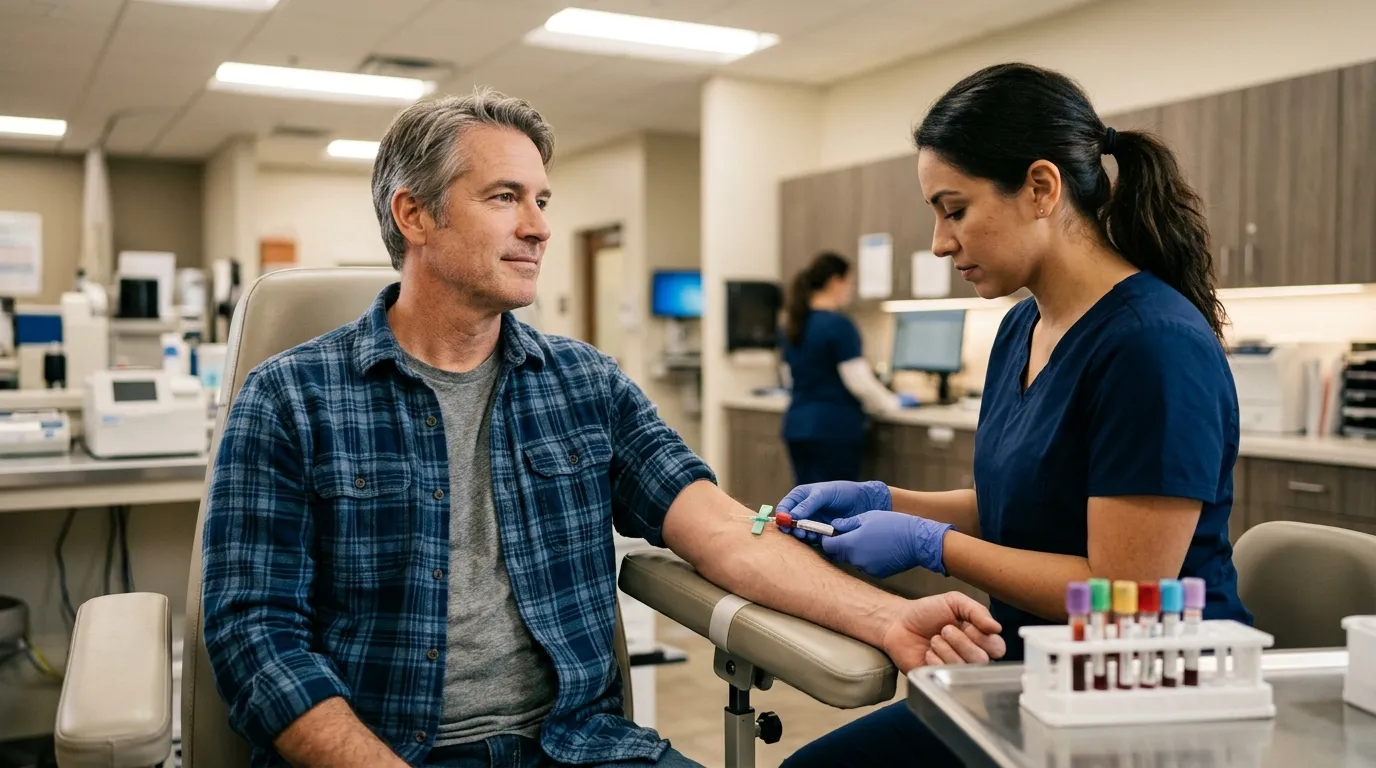
What Is Free Testosterone?
Free testosterone is the fraction of testosterone that is not bound to any protein — it circulates freely in the bloodstream and is immediately available to bind with androgen receptors in your tissues, muscles, brain, and organs. Although it represents only about 1 to 3 percent of your total testosterone, this small fraction is biologically the most active and arguably the most clinically meaningful number on your panel.
Free testosterone is measured in picograms per milliliter (pg/mL). Reference ranges vary by lab and age, but a commonly cited normal range for adult men is roughly 5 to 25 pg/mL, with many TRT-experienced clinicians aiming for the higher half of that range for optimal symptom resolution.
Because free testosterone is harder to measure directly — the gold-standard equilibrium dialysis method is expensive and not widely available — many labs calculate it using formulas that factor in total testosterone, SHBG, and albumin. While calculated free testosterone has some limitations, it is still considerably more informative than total testosterone alone.
When evaluating free testosterone vs total testosterone, think of total as the size of your paycheck, and free testosterone as the amount left after taxes, rent, and bills — what you actually get to spend. A man earning a decent salary but with enormous fixed costs may still end up cash-poor. Similarly, a man with "normal" total testosterone but elevated SHBG may be functionally testosterone-deficient at the cellular level.
Symptoms of low free testosterone mirror those of clinical low T: persistent fatigue, reduced libido, difficulty building or maintaining muscle, mood changes, brain fog, and poor sleep. If you're experiencing these and want to understand how your lab numbers connect to your symptoms, our comprehensive guide to TRT lab results explained walks you through every relevant biomarker.
Free Testosterone vs Total: Key Differences at a Glance
To put the comparison in practical terms, here's how the two measurements differ in what they measure, why they matter, and how they're used clinically:
| Feature | Total Testosterone | Free Testosterone |
|---|---|---|
| What it measures | All testosterone in blood (bound + free) | Unbound, biologically active testosterone only |
| Unit of measurement | ng/dL | pg/mL |
| Typical normal range (adult men) | 300–1,000 ng/dL | 5–25 pg/mL |
| Affected by SHBG levels | Yes, but not reflected in the number | Yes — high SHBG directly lowers free T |
| Routinely tested? | Yes — standard panel | Less common — often requires specific request |
| Best for diagnosing low T? | Useful but incomplete | More clinically complete picture |
Both numbers have value, and most experienced TRT providers look at both alongside SHBG, LH, FSH, and other markers when making a clinical decision. For a detailed breakdown of which tests belong in your pre-treatment panel, see our guide on TRT blood work: which tests you need before and during treatment.
The Role of SHBG in the Free vs Total Testosterone Equation
Sex hormone-binding globulin, or SHBG, is the protein that has the greatest influence on the gap between your total and free testosterone levels. Produced primarily in the liver, SHBG binds tightly to testosterone (and to a lesser extent estrogen), effectively removing it from active circulation. When SHBG is elevated, even men with total testosterone in the mid-to-upper normal range can find themselves functionally deficient.
SHBG levels tend to rise with age, which partly explains why older men can feel testosterone-deficient despite total levels that appear acceptable on paper. Certain medical conditions also raise SHBG, including liver disease, hyperthyroidism, and the use of some medications. On the flip side, conditions like obesity, type 2 diabetes, and insulin resistance tend to lower SHBG — sometimes producing the opposite problem, where low total testosterone is accompanied by relatively normal free testosterone.
This is why the conversation about free testosterone vs total almost always has to include SHBG as a third variable. Consider the following scenarios:
- High total testosterone + high SHBG: Free testosterone may be low — symptoms of low T are likely.
- Normal total testosterone + low SHBG: Free testosterone may be proportionally higher — fewer symptoms expected.
- Low total testosterone + low SHBG: The picture is complicated and requires careful interpretation.
A qualified TRT provider won't just glance at your total testosterone number and make a decision. They'll factor in SHBG, albumin, your symptom burden, and your overall health picture before recommending any course of action. If you'd like to understand the role of LH and FSH in this diagnostic process, those markers add another important layer to the conversation.

When Doctors Use Free vs Total Testosterone for Diagnosis
The Endocrine Society's clinical practice guidelines acknowledge that while total testosterone is the standard first-line test for diagnosing hypogonadism, free or bioavailable testosterone should be measured when total testosterone is borderline or when SHBG abnormalities are suspected. The American Urological Association similarly emphasizes that clinical symptoms must be considered alongside laboratory values — not replaced by them.
In practice, many men fall into a gray zone. Their total testosterone might sit between 300 and 450 ng/dL — technically within the lower end of the normal range — while their free testosterone is clearly suppressed, and their symptoms are significantly impacting quality of life. In these cases, relying on total testosterone alone would lead to a missed diagnosis or an incorrect dismissal of real hormonal dysfunction.
This is especially relevant for men who have had their concerns minimized by general practitioners who ran only a basic panel. If your doctor only checked total testosterone and said you were fine, but you're still experiencing symptoms like low libido, muscle weakness, fatigue, or mood changes, requesting a full panel that includes free testosterone, SHBG, and related biomarkers is a reasonable and well-supported clinical request.
It's also worth noting that standard lab reference ranges are derived from population averages — they don't account for the level of testosterone at which a specific individual feels their best. Some men thrive at 600 ng/dL total testosterone; others feel symptomatic at that same level if their free fraction is suppressed. This is why personalized medicine and symptom-guided treatment are central to good TRT practice. Learn more about how to get diagnosed with low testosterone through the proper process.
What Happens to Free and Total Testosterone on TRT?
Once a man begins testosterone replacement therapy, both total and free testosterone levels rise. However, the relationship between the two remains clinically important throughout treatment. A well-managed TRT protocol aims not just to bring total testosterone into range, but to optimize free testosterone specifically — because free testosterone is what your body actually uses.
Many providers use a target range for total testosterone of 600 to 900 ng/dL during TRT, while aiming for free testosterone in the upper portion of the normal range. However, these targets are adjusted based on the individual's symptoms, response, SHBG levels, and other factors. Some men with naturally high SHBG may need higher total testosterone targets to achieve adequate free testosterone levels.
Monitoring both values during treatment is standard practice. SHBG can shift as treatment progresses — some forms of TRT may influence SHBG differently than others. For example, injectable testosterone and topical gels can produce different hormonal profiles over time, which affects how free testosterone is distributed. Regular lab work every 3 to 6 months during the first year of TRT allows your provider to fine-tune your protocol and ensure both numbers remain in an optimal range.
For a comprehensive look at what your labs should show throughout treatment, our article on optimal testosterone levels on TRT covers the targets experienced clinicians aim for at different stages of therapy.
How to Get Both Numbers Tested
If you've only ever had total testosterone checked, getting a more complete picture is straightforward. When ordering or requesting labs, ask specifically for:
- Total testosterone (serum) — morning blood draw, ideally between 7 and 10 a.m. when levels peak
- Free testosterone — either directly measured (equilibrium dialysis) or calculated
- SHBG — essential context for interpreting the free/total relationship
- Albumin — used in calculating bioavailable testosterone
- LH and FSH — to understand whether the pituitary is signaling correctly
- Estradiol (E2) — important for overall hormonal balance on and off TRT
Many primary care physicians order only total testosterone, not because they're being careless, but because standard protocols don't always account for the nuance of free vs total testosterone in everyday practice. A specialist — whether an endocrinologist, urologist, or experienced TRT provider — is more likely to order the full panel automatically.
If you're considering working with a dedicated hormone clinic, find a TRT clinic near you through our directory to connect with providers who routinely test and interpret the complete hormonal picture. Alternatively, if you prefer the convenience of remote care, our comparison of telehealth TRT providers outlines the top options available in 2026.
Getting properly tested is the foundational step before any treatment decision is made. Without free testosterone and SHBG data, even the most experienced provider is working with incomplete information. And if you're unsure whether your symptoms warrant testing at all, take the free Low T symptom quiz to get a better sense of where you stand.

Free Testosterone vs Total: Which Number Should Guide Your TRT Decision?
The honest answer is: both matter, but free testosterone is often the more clinically actionable number — particularly when your total falls in the gray zone or when your SHBG is known to be abnormal. The Endocrine Society and other major medical bodies are clear that symptoms must always be considered alongside lab values. A man with low-normal total testosterone and clearly suppressed free testosterone, combined with a significant symptom burden, is a strong candidate for further evaluation and potentially TRT.
At the same time, total testosterone remains a useful screening tool and a necessary part of any panel. The two measurements are complementary, not competing. The real mistake — and the one that leaves many men suffering unnecessarily — is treating total testosterone as the sole determinant of hormonal health.
TRT is an established, FDA-recognized medical therapy that has helped millions of men restore energy, strength, mental clarity, sexual function, and overall quality of life. When prescribed based on a complete hormonal picture and managed by a qualified provider, the treatment is both safe and effective. The key is working with someone who understands the nuance of free testosterone vs total testosterone — and who interprets your labs in the context of your full clinical picture.
If you're ready to take the next step, find a TRT clinic near you and schedule a consultation with a provider who will run a complete panel and take your symptoms seriously. You can also explore what to expect in detail with our guide to your first TRT consultation. Understanding the difference between free and total testosterone puts you in a far stronger position to advocate for your own health — and to finally get answers that match how you feel.
Sources & References
- Testosterone Therapy in Men with Hypogonadism: An Endocrine Society Clinical Practice Guideline — Journal of Clinical Endocrinology & Metabolism / Endocrine Society [Link]
- Measurement of Serum Free Testosterone: Comparison of Equilibrium Dialysis and a Novel Modified Ammonium Sulfate Precipitation Method — Journal of Clinical Endocrinology & Metabolism [Link]
- AUA Guideline on Evaluation and Management of Testosterone Deficiency — American Urological Association [Link]
- Testosterone — Mayo Clinic Laboratories Reference Range — Mayo Clinic Laboratories [Link]
- Sex Hormone-Binding Globulin and the Free Androgen Index: Clinical Significance — Cleveland Clinic Journal of Medicine [Link]
- Reference Ranges for Testosterone in Men Generated Using Liquid Chromatography Tandem Mass Spectrometry in a Community-Based Sample — European Journal of Endocrinology [Link]
- Diagnosis and Treatment of Testosterone Deficiency: Updated Recommendations from the Canadian Men's Health Foundation Multidisciplinary Guidelines Committee — Canadian Urological Association Journal [Link]
Frequently Asked Questions
Ready to Take the Next Step?
Check your symptoms with our free quiz or browse 2,500+ verified TRT clinics.