Medical Disclaimer
The information on this website is for educational purposes only and is not a substitute for professional medical advice, diagnosis, or treatment. Always consult a qualified healthcare provider before starting any hormone therapy. Individual results may vary. TRTscout does not provide medical services or prescribe medications.
Key Takeaways
- Testosterone levels fluctuate significantly throughout the day — always test in the morning between 7–10 AM for the most accurate results.
- Total testosterone alone is often insufficient; free testosterone, SHBG, LH, FSH, and estradiol should be part of any comprehensive panel.
- Lab methodology matters — LC-MS/MS (mass spectrometry) is more accurate than standard immunoassay tests, especially for borderline readings.
- Clinical guidelines recommend confirming low testosterone with at least two separate morning blood draws before making a diagnosis.
- On TRT, draw timing relative to your last dose (peak vs. trough) dramatically affects your results and must be consistent for meaningful monitoring.
- A number on a lab report is a data point, not a diagnosis — symptoms must always be evaluated alongside testosterone levels by a qualified provider.
Why Testosterone Testing Accuracy Matters More Than You Think
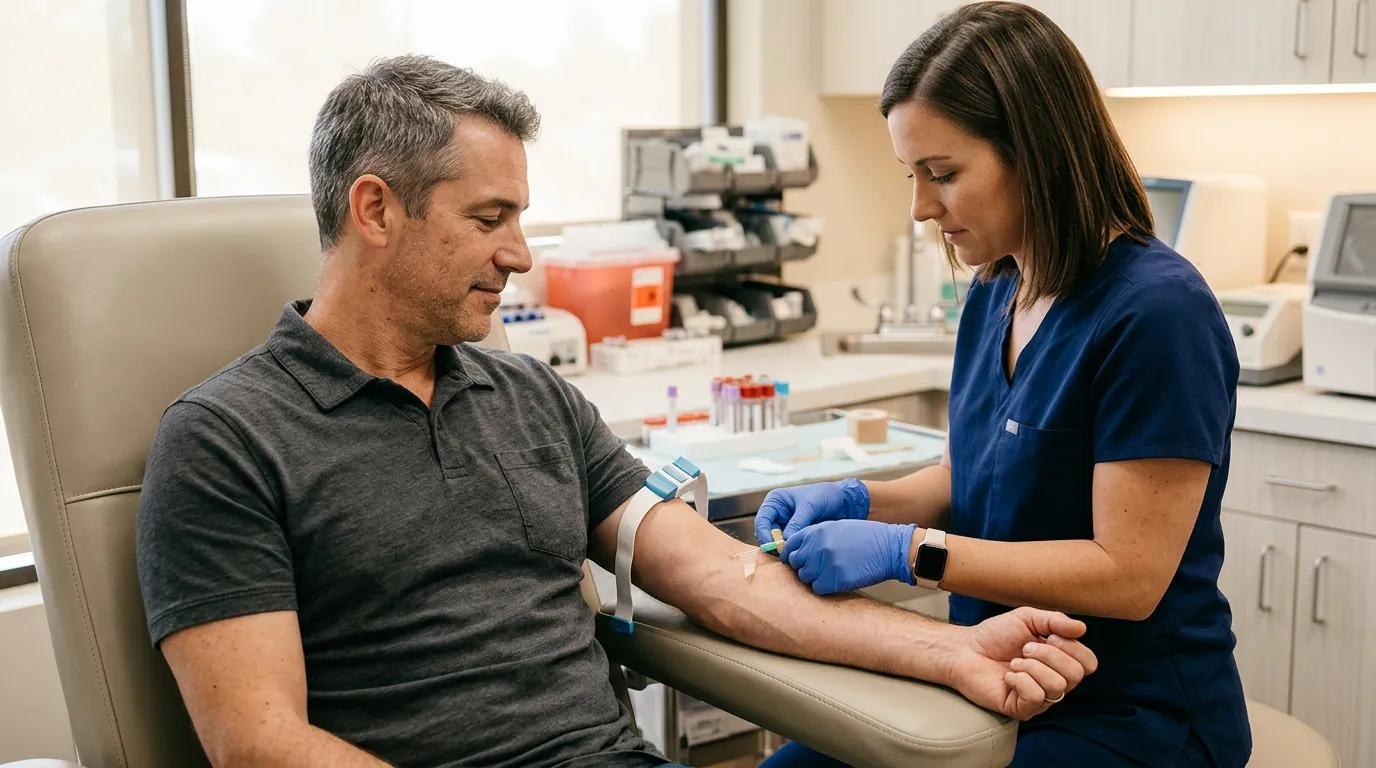
If you've ever had a testosterone test come back "normal" while still feeling exhausted, foggy, and like a shell of your former self, you're not imagining things. Testosterone testing accuracy is one of the most overlooked factors in diagnosing low testosterone — and getting it wrong can mean months or years of unnecessary suffering.
This article is for educational purposes only and does not constitute medical advice. Always consult a qualified healthcare provider before making any decisions about your health or treatment.
The reality is that a single blood test taken at the wrong time of day, using the wrong measurement method, or without the right supporting panels can produce results that are technically within range but clinically meaningless for your situation. Understanding what drives lab result variability — and how to work with a knowledgeable provider — is the difference between getting real answers and being told everything is "fine."
To understand your full hormonal picture, it helps to start with a solid foundation. Check out our guide on TRT Blood Work: Which Tests You Need (Before & During Treatment) for a complete breakdown of what should be ordered.
What Is Being Measured: Total vs. Free Testosterone
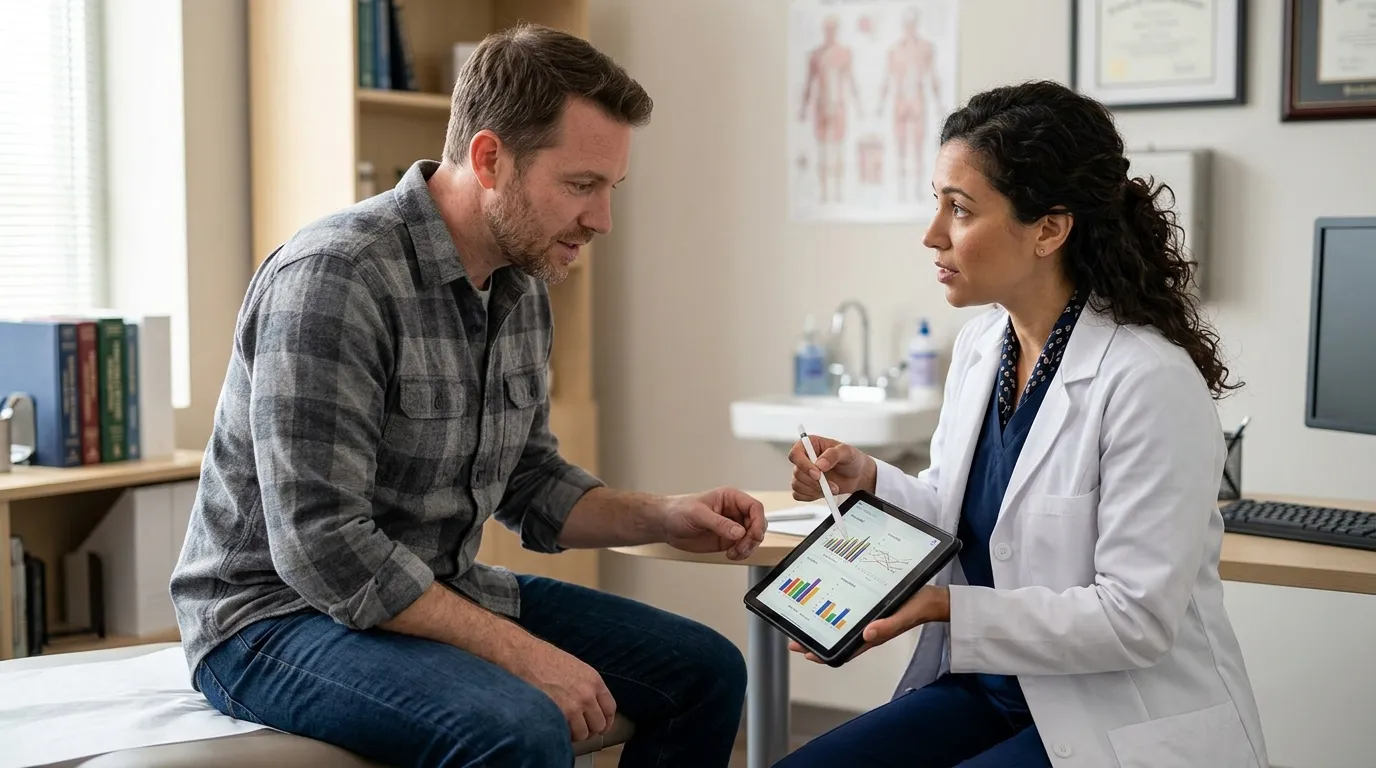
Most standard lab panels report total testosterone — the combined measure of all testosterone circulating in your blood, including testosterone that is bound to proteins. However, only a fraction of that total is actually usable by your body. This is where the distinction between total and free testosterone becomes critical to understanding test reliability.
Approximately 44–65% of testosterone binds tightly to sex hormone-binding globulin (SHBG), making it biologically inactive. Another 30–54% binds loosely to albumin and is considered weakly active. Only about 1–3% is truly "free" and able to enter cells and exert its effects. A man with seemingly normal total testosterone but elevated SHBG could have very low free testosterone — and experience every symptom of hypogonadism as a result.
This is why many experienced TRT providers insist on measuring free testosterone alongside total testosterone. Our article on Free Testosterone vs Total: Which Number Matters More? goes deep on this distinction. Similarly, understanding SHBG is essential — read more in What Is SHBG and Why It Matters for TRT.
There are also different methods labs use to calculate or directly measure free testosterone. The equilibrium dialysis method is considered the gold standard, but it's expensive and not universally available. Many labs use a calculated free testosterone based on total testosterone, SHBG, and albumin — which is a reasonable estimate but introduces its own variables. Immunoassay-based direct free testosterone tests are widely used but are known to be less accurate than equilibrium dialysis, particularly at low concentrations.
Bottom line: if your provider only ordered total testosterone, you may be missing a significant piece of your hormonal puzzle.
Factors That Affect Testosterone Testing Accuracy
Even with the right tests ordered, a number of biological and logistical variables can significantly alter your testosterone results — sometimes enough to shift a result from low to normal or vice versa. Recognizing these factors puts you in a better position to advocate for accurate testing.
Time of Day
Testosterone follows a strong circadian rhythm. Levels are typically highest in the early morning — between 7:00 and 10:00 AM — and can drop by 20–35% by the afternoon. According to Endocrine Society guidelines, blood draws for testosterone should be performed in the morning, ideally between 7:00 and 10:00 AM. A test drawn at 2:00 PM may show levels 25–30% lower than a morning draw, potentially resulting in an unnecessary diagnosis of hypogonadism or, conversely, masking a true deficiency in some contexts.
Acute Illness and Stress
Physical illness, sleep deprivation, or acute psychological stress can all temporarily suppress testosterone production. Cortisol — the primary stress hormone — directly inhibits the hypothalamic-pituitary-gonadal axis. Testing while sick, after a poor night of sleep, or in a high-stress period can significantly depress your results below your true baseline.
Recent Exercise and Alcohol
Intense exercise in the 24 hours before a test can transiently alter hormone levels. Alcohol consumption — even moderate drinking the night before — is known to suppress testosterone acutely. For best results, avoid strenuous exercise and alcohol for at least 24 hours before your blood draw.
Fasting vs. Fed State
Research suggests that eating before a blood draw can lower testosterone readings. One study published in the journal Clinical Endocrinology found that testosterone levels were measurably lower after a meal compared to fasted levels. Fasting for at least 8–10 hours before the draw is generally recommended.
Lab and Assay Variation
Not all laboratories use the same assay technology. Immunoassay-based tests — the most common type used in standard labs — are known to have inter-lab variability of up to 20–30% at low testosterone concentrations. Mass spectrometry (LC-MS/MS) is considered more precise and is recommended by the Endocrine Society for borderline cases.
How Lab Reference Ranges Can Mislead You
Even when a test is performed correctly, the reference ranges used to interpret results can be misleading. Most labs define "normal" testosterone as anywhere from roughly 300 to 1,000 ng/dL — a massive window. A man with a result of 310 ng/dL is technically "within range," yet his levels may be far below what his body needs to function optimally.
Reference ranges are established by measuring large populations that include men of all ages, including elderly men whose testosterone has naturally declined. This means that a 35-year-old man's result is being compared against a reference range that includes 80-year-olds. The Endocrine Society has noted this limitation and emphasizes that clinical symptoms must always be evaluated alongside laboratory values.
Furthermore, reference ranges vary between laboratories. Quest Diagnostics, LabCorp, and specialty hormone labs may each report slightly different normal ranges for the same test. This is why it's important to work with a provider who interprets your labs in the context of your symptoms, not just against a printed range.
Our guide on TRT Lab Results Explained: What Your Numbers Mean is an excellent companion resource if you're trying to make sense of your current panels. And if you're wondering whether your symptoms align with low testosterone, take the free Low T symptom quiz — it only takes a few minutes and can help you decide whether to pursue further testing.

The Role of SHBG, LH, FSH, and Other Supporting Markers
A testosterone test in isolation tells only part of the story. To truly understand what's happening in your hormonal system, a comprehensive panel is necessary. Experienced TRT providers look at multiple markers together to build a full picture of your endocrine health and pinpoint the root cause of any abnormality.
SHBG (Sex Hormone-Binding Globulin) is essential for calculating or contextualizing free testosterone. High SHBG binds more testosterone, leaving less biologically active. Low SHBG has the opposite effect but may also signal metabolic issues like insulin resistance.
LH (Luteinizing Hormone) and FSH (Follicle-Stimulating Hormone) are pituitary signals that tell the testes to produce testosterone. Measuring these helps distinguish between primary hypogonadism (a problem with the testes) and secondary hypogonadism (a problem with the brain's signaling). This distinction has major implications for treatment. Learn more in our article on LH and FSH Explained: What They Mean for TRT.
Estradiol (E2) — testosterone aromatizes into estrogen in the body, and imbalanced estradiol can drive symptoms even when testosterone is adequate. Read more in Estradiol (E2) in Men on TRT: What You Need to Know.
Prolactin elevated levels can suppress testosterone production and point to a pituitary issue that needs separate evaluation. Our article on Prolactin and Testosterone: The Hidden Connection covers this in detail.
Other markers commonly included in a thorough panel are complete blood count (CBC), comprehensive metabolic panel, thyroid-stimulating hormone (TSH), PSA (for men over 40), and hematocrit. Running a full panel is not just best practice — it's the foundation of responsible hormone medicine.
When to Retest: Confirming a Low Testosterone Diagnosis
Because so many variables can affect a single blood test, the Endocrine Society and most major clinical guidelines recommend that low testosterone be confirmed with at least two separate morning blood draws before a diagnosis is made — especially when the result is borderline. A single low reading may reflect a transient suppression rather than true chronic hypogonadism.
Retesting should ideally be done on a different day, under similar conditions (morning, fasted, rested, unstressed), and ideally using the same laboratory to minimize inter-lab variability. If the first test was done at a general lab using an immunoassay, consider requesting LC-MS/MS methodology for the confirmatory test — particularly if your level falls in the gray zone of 250–400 ng/dL.
It's also worth noting that conditions like obesity, type 2 diabetes, hypothyroidism, and sleep apnea can all cause transient or secondary reductions in testosterone. Treating these underlying conditions first — or at least accounting for them — can sometimes restore testosterone levels without direct hormone therapy. This is another reason why a full medical evaluation, not just a testosterone test, is the right starting point. Our article on Low Testosterone Misdiagnosis: Conditions That Mimic Low T explores this in detail.
If you've been symptomatic and your first test came back borderline, don't accept a dismissal. Push for a repeat morning draw with a full panel — you deserve a complete answer.
Testosterone Testing Accuracy During TRT Monitoring
Testosterone testing accuracy is just as important after starting TRT as it is during the diagnostic phase. In fact, the timing of your monitoring blood draw becomes even more critical when you're on therapy, because testosterone levels fluctuate significantly depending on your delivery method and where you are in your dosing cycle.
For men on weekly or twice-weekly injections, testosterone peaks approximately 24–72 hours after injection and troughs just before the next dose. Testing at peak will produce a very different number than testing at trough — sometimes by 400–600 ng/dL or more. Most TRT providers recommend drawing labs at trough (just before the next injection) to capture your lowest functional level and ensure it remains adequate. Others may test midpoint to assess average exposure. Either approach is valid as long as it's consistent and interpreted correctly.
For men on topical gels or creams, timing the draw 2–8 hours after application typically captures near-peak levels. For pellet therapy, mid-cycle testing (4–6 weeks after insertion) is standard. Our resource on TRT Peak and Trough: What They Mean for Your Protocol explains this timing framework clearly.
Inconsistent testing timing is one of the most common reasons men on TRT feel confused about their results or end up with unnecessarily adjusted doses. Always note the exact timing of your last dose relative to your blood draw, and discuss this with your provider every time you review labs.

How to Get the Most Accurate Testosterone Test Possible
The good news is that most of the variables affecting testosterone testing accuracy are within your control — or at least something a knowledgeable provider can account for. Here's a practical framework for ensuring your results are as reliable as possible.
Pre-Test Checklist for Testosterone Testing Accuracy
- Schedule your draw between 7:00 and 10:00 AM — this captures peak physiological levels and aligns with clinical guidelines
- Fast for at least 8 hours beforehand — water is fine, avoid coffee if possible as it may acutely alter cortisol and hormones
- Avoid alcohol for 24–48 hours before the draw
- Skip intense exercise the day before testing
- Aim for 7–9 hours of sleep the night before — sleep deprivation meaningfully suppresses testosterone
- Test when you're healthy — reschedule if you're fighting an illness or have been under extreme acute stress
- Request a comprehensive panel — total testosterone, free testosterone (by equilibrium dialysis or reliable calculation), SHBG, LH, FSH, estradiol, prolactin, CBC, and metabolic markers
- Request LC-MS/MS methodology for testosterone measurement if your result is borderline or if you've had unexplained symptoms
- Use the same lab for retesting to reduce inter-lab variability
Working with a qualified TRT provider who understands these nuances makes all the difference. Find a TRT clinic near you using our directory, or if you'd like to understand your symptoms first, take the free Low T symptom quiz before your appointment.
Understanding Your Results in the Context of Symptoms
Even a perfectly executed test with accurate methodology can only tell you so much. The number on your lab report is a data point — it is not, by itself, a diagnosis. The Endocrine Society's clinical practice guidelines are explicit on this: a diagnosis of hypogonadism requires both consistently low testosterone levels and the presence of signs and symptoms consistent with testosterone deficiency.
This means that a man with a testosterone of 280 ng/dL but no symptoms does not necessarily need treatment, while a man with 350 ng/dL and significant fatigue, low libido, mood changes, and muscle loss may be a strong candidate for TRT — particularly if free testosterone is low due to elevated SHBG.
Symptoms of low testosterone can be subtle and overlap with other conditions. Fatigue, brain fog, reduced motivation, poor sleep, decreased muscle mass, and changes in mood are all consistent with low T, but can also reflect thyroid dysfunction, depression, sleep disorders, or nutritional deficiencies. Our article on Low Testosterone Symptoms After 40 (What's Normal?) can help you sort through what you're experiencing.
A thorough provider will review your full symptom picture, your medical history, your lifestyle, and your complete lab panel — not just one number. This holistic approach is what separates good hormone medicine from a checkbox exercise. If you feel your concerns aren't being taken seriously, seeking a second opinion from a specialist is always appropriate.
For men who are ready to take action, our How to Get Diagnosed with Low Testosterone (Full Process) guide walks you through every step, from initial testing to treatment decisions.
Finding a Provider Who Prioritizes Accurate Testing
Testosterone testing accuracy ultimately depends on the provider ordering the tests as much as it does on the laboratory performing them. A general practitioner who orders a single afternoon total testosterone test, interprets it against a broad population reference range, and sends you home with a printed normal result may be technically doing their job — but they're not practicing optimal hormone medicine.
Specialized TRT clinics and hormone-focused practitioners typically take a more rigorous approach: comprehensive panels, morning draws, repeat confirmation of borderline results, LC-MS/MS methodology when needed, and symptom-driven clinical judgment. These providers also understand how to time lab work correctly during ongoing therapy and adjust treatment based on full-picture data rather than a single data point.
When evaluating providers, ask specifically: Do you test free testosterone and SHBG? Do you use mass spectrometry for borderline results? How do you time monitoring labs relative to injections? The answers will tell you a great deal about their level of expertise.
Our directory can help you connect with experienced specialists. Find a TRT clinic near you, or explore resources like our TRT Clinic vs Urologist: Where Should You Get Treatment? comparison and our guide on How to Find a TRT Doctor to make a confident, informed choice.
Testosterone testing accuracy is not a minor detail — it is the foundation of accurate diagnosis and effective treatment. With the right knowledge, the right timing, and the right provider by your side, you can get results you can actually trust — and take meaningful action based on them.
Sources & References
- Testosterone Therapy in Men with Hypogonadism: An Endocrine Society Clinical Practice Guideline — Journal of Clinical Endocrinology & Metabolism [Link]
- Measurement of Testosterone in Clinical Practice — PubMed / Journal of Clinical Endocrinology & Metabolism [Link]
- Circadian Variation in Serum Testosterone in Healthy Young Men — PubMed / Journal of Andrology [Link]
- Harmonization of Testosterone Measurements and Reference Ranges — PubMed / Steroids [Link]
- Evaluation and Management of Testosterone Deficiency: AUA Guideline — American Urological Association [Link]
- Male Hypogonadism — Diagnosis and Treatment — Mayo Clinic [Link]
- Sex Hormone-Binding Globulin and Testosterone Measurement — PubMed / Clinical Chemistry [Link]
Frequently Asked Questions
Ready to Take the Next Step?
Check your symptoms with our free quiz or browse 2,500+ verified TRT clinics.