
Medical Disclaimer
The information on this website is for educational purposes only and is not a substitute for professional medical advice, diagnosis, or treatment. Always consult a qualified healthcare provider before starting any hormone therapy. Individual results may vary. TRTscout does not provide medical services or prescribe medications.
Key Takeaways
- Low testosterone disrupts the hypothalamus's ability to regulate body temperature, leading to night sweats, hot flashes, and disproportionate sweating in some men.
- Approximately 40% of men with clinically low testosterone (hypogonadism) report vasomotor symptoms including night sweats and heat episodes.
- Sweating from low T is often accompanied by fatigue, low libido, mood changes, brain fog, and muscle loss — recognizing the full cluster is key to diagnosis.
- TRT effectively addresses the hormonal root cause of sweating, with many men seeing significant improvement within 4–8 weeks of starting treatment.
- High estrogen levels during TRT can also cause sweating — a manageable issue that a qualified provider addresses through regular lab monitoring and protocol adjustment.
- Getting properly tested with a comprehensive hormone panel is the essential first step — find a qualified TRT provider or use a telehealth platform to get started.
If you've been waking up drenched at night, sweating through your shirt during ordinary activities, or experiencing sudden waves of heat for no obvious reason, your body may be sending you a signal worth paying attention to. The connection between low testosterone and sweating is well-documented but frequently overlooked — especially because many men don't realize that hormonal imbalances can affect the body's ability to regulate temperature. This article is for informational purposes only and does not constitute medical advice. Always consult a qualified healthcare provider for diagnosis and treatment.
The good news is that excessive sweating related to low testosterone is a manageable condition. Understanding the underlying mechanism is the first step toward finding real relief — and for many men, addressing the root hormonal cause makes a dramatic difference. Let's break down exactly what's happening and what your options are.

The Science Behind Low Testosterone and Sweating
Testosterone plays a surprisingly broad role in how the body functions day-to-day, including how it regulates core temperature. When testosterone levels drop below optimal ranges — generally considered below 300 ng/dL by most clinical guidelines — the hypothalamus, which acts as the body's internal thermostat, can become dysregulated. This is the same mechanism responsible for hot flashes and night sweats in menopausal women, and it operates through very similar pathways in men with low T.
The hypothalamus uses sex hormones, including testosterone and its downstream conversion product estradiol, as part of its thermoregulatory signaling. When these hormone levels fluctuate or fall too low, the hypothalamus may misread the body's temperature and trigger cooling responses — including sweating and increased skin blood flow — even when you're not actually overheated.
Research published in peer-reviewed journals has confirmed that men with clinically low testosterone frequently report vasomotor symptoms, which is the medical term for symptoms involving sudden changes in blood vessel dilation that produce heat and sweating. One study found that roughly 40 percent of men with hypogonadism (the clinical diagnosis for low testosterone) reported experiencing hot flashes or night sweats. These aren't just uncomfortable — they can seriously disrupt sleep, affect mood, and reduce quality of life.
It's also worth noting that low testosterone is often accompanied by elevated or fluctuating estrogen levels in men, which can compound the sweating response. As testosterone drops, more of it may be converted to estrogen through a process called aromatization — and this estrogen imbalance can further disrupt thermoregulation. If you're curious about how estrogen levels interact with testosterone therapy, our article on Estradiol (E2) in Men on TRT covers this in detail.
Common Sweating Patterns Associated With Low T
Not all sweating linked to low testosterone looks the same. Men tend to experience it in a few distinct patterns, and recognizing yours can help you have a more productive conversation with a healthcare provider.
Night Sweats and Low Testosterone and Sweating
Night sweats are one of the most frequently reported symptoms among men with low T. You might fall asleep feeling fine and wake up a few hours later with damp sheets or a soaked pillow — not because the room is warm, but because your hormonal system triggered a cooling response while you were asleep. This can happen multiple times per night and significantly impair sleep quality, which then creates a cascade of other problems: fatigue, brain fog, irritability, and reduced testosterone production (since most testosterone is produced during deep sleep). If you're experiencing sleep disruption alongside these symptoms, our piece on TRT and Sleep: Does Testosterone Improve Sleep? is a helpful read.
Hot Flashes During the Day
Some men with low testosterone experience hot flashes similar to those described by menopausal women — a sudden wave of warmth, often starting in the chest or face, accompanied by flushing and sweating. These episodes can last anywhere from a few seconds to several minutes and may occur multiple times per day. They can be embarrassing in professional or social settings and are often chalked up to stress or anxiety when the real cause is hormonal. Learn more about this pattern in our detailed guide on Hot Flashes in Men: A Surprising Sign of Low Testosterone.
Exercise Intolerance and Disproportionate Sweating
Some men notice they sweat far more than they used to during physical activity, or that they feel overheated at exercise intensities that never bothered them before. Low testosterone affects cardiovascular efficiency and metabolic function, which can make the body work harder — and heat up faster — during exertion. This is distinct from normal healthy sweating during a workout and is worth noting if it's a recent change.
Other Low T Symptoms That Often Accompany Excessive Sweating
Sweating rarely appears in isolation when low testosterone is the cause. It typically shows up alongside a cluster of other symptoms that, taken together, paint a clearer picture of hormonal deficiency. Understanding these accompanying signs can help you recognize whether your sweating is part of a broader hormonal picture.
- Fatigue and low energy: Persistent tiredness that doesn't improve with rest is one of the most common low T symptoms. If you find yourself exhausted despite adequate sleep, that's worth noting.
- Reduced libido: A noticeable drop in sex drive is a classic sign of low testosterone. Our article on TRT for Low Libido: Does It Work? explores the connection in depth.
- Mood changes: Low T is strongly associated with depression, irritability, and anxiety. Many men describe feeling emotionally flat or quick to anger without clear provocation.
- Difficulty concentrating: Brain fog and poor focus are underappreciated symptoms of low testosterone, as explored in our guide on Testosterone and Focus: How Low T Affects Concentration.
- Muscle loss and increased body fat: Testosterone is critical for maintaining lean muscle mass. When it drops, muscle loss and fat gain — particularly around the abdomen — can accelerate. Read more in our article on Low Testosterone and Muscle Weakness: Causes and Solutions.
- Sleep disruption: Beyond night sweats, low T can directly impair sleep architecture, reducing time spent in restorative deep sleep.
If several of these symptoms resonate with you, it's worth taking stock of the full picture. You can take the free Low T symptom quiz to get a clearer sense of whether your symptoms align with hypogonadism — and what your next steps should be.

Could Something Else Be Causing Your Sweating?
It's important to recognize that excessive sweating has multiple potential causes, and a qualified provider will want to rule out other contributors before attributing it solely to low testosterone. This doesn't complicate your path forward — it just means good medicine involves thorough evaluation.
Other conditions that can cause excessive sweating or hot flashes in men include:
- Thyroid disorders: Both hyperthyroidism and certain thyroid fluctuations can trigger excessive sweating and heat intolerance.
- Diabetes and blood sugar dysregulation: Hypoglycemic episodes can cause sweating, especially at night.
- Sleep apnea: Obstructive sleep apnea is a frequent cause of night sweats in men and also has a bidirectional relationship with testosterone levels.
- Medications: Antidepressants, blood pressure medications, and other drugs commonly cause sweating as a side effect.
- Anxiety disorders: Chronic anxiety activates the sympathetic nervous system, producing sweating as a physical symptom.
- Primary hyperhidrosis: A condition of excessive sweating unrelated to underlying disease, often localized to the palms, feet, or underarms.
This is why proper testing matters so much. A comprehensive hormone panel — covering total testosterone, free testosterone, estradiol, LH, FSH, thyroid markers, and more — is the foundation of accurate diagnosis. Our guide on TRT Blood Work: Which Tests You Need (Before and During Treatment) breaks down exactly what to ask for. Conditions that mimic low T can sometimes lead to misdiagnosis, which is why reading about Low Testosterone Misdiagnosis: Conditions That Mimic Low T is also worthwhile before your consultation.
How TRT Can Help With Sweating and Thermoregulation
For men whose excessive sweating is rooted in low testosterone, testosterone replacement therapy (TRT) is a highly effective and well-studied intervention. By restoring testosterone levels to a healthy physiological range, TRT directly addresses the hormonal dysregulation that destabilizes the hypothalamic thermostat. Clinical evidence and real-world patient outcomes consistently show that vasomotor symptoms — including hot flashes, night sweats, and excessive sweating — improve significantly with TRT.
A review of clinical data published in the Journal of Clinical Endocrinology and Metabolism found that men treated for hypogonadism reported substantial reductions in vasomotor symptoms, with many experiencing near-complete resolution of night sweats and hot flashes within the first few months of therapy. Improved sleep quality frequently follows, which itself creates a positive feedback loop — better sleep supports healthy testosterone production and improves energy, mood, and cognitive function.
TRT is available in several forms, each with its own delivery profile and practical considerations:
| Delivery Method | Frequency | Onset of Effect | Key Consideration |
|---|---|---|---|
| Testosterone injections | Weekly or biweekly | Rapid (days) | Hormone levels may fluctuate between doses |
| Topical gel or cream | Daily | Gradual (weeks) | Stable levels; transfer risk to others |
| Transdermal patches | Daily | Gradual (weeks) | Consistent delivery; skin irritation possible |
| Subcutaneous pellets | Every 3–6 months | Gradual (weeks) | Long-lasting; procedure required |
| Nasal gel | Three times daily | Rapid | Minimal transfer risk; frequent dosing |
For more on comparing these options, see our guides on TRT Injections vs Gel: Which Is Better? and TRT Gel vs Patches: Which Delivery Method Is Best?. The right choice depends on your lifestyle, preferences, and how your body responds — a qualified TRT provider will help you navigate this.
What to Expect When Starting TRT for Sweating Symptoms
One of the most common questions men have is: how quickly will my sweating improve on TRT? The honest answer is that timelines vary depending on how low your levels are, which delivery method you use, and how your body responds to treatment. That said, many men report noticeable improvements in night sweats and heat sensitivity within the first four to eight weeks of therapy.
The first few weeks of TRT are a period of hormonal recalibration. Your body is adjusting to having adequate testosterone again, and some men temporarily notice increased sensitivity as levels fluctuate toward their new baseline. This is normal and typically resolves as levels stabilize. A well-structured protocol with regular monitoring makes this process smoother and more predictable.
It's also worth knowing that TRT's benefits extend well beyond sweating. Men who start therapy for vasomotor symptoms often report improvements across multiple domains: better sleep, increased energy, improved mood and motivation, better body composition, and enhanced libido — often within the first few months. Our article on How Long Does TRT Take to Work? provides a detailed timeline of what to expect week by week and month by month.
Regular lab monitoring is a core part of safe, effective TRT. Your provider will check your testosterone levels, hematocrit, estradiol, and other markers at regular intervals to ensure your protocol is dialed in. Our guide on TRT Lab Results Explained: What Your Numbers Mean can help you understand what you're looking at when your results come back.
Sweating on TRT: When Treatment Itself Causes Symptoms
It's worth briefly addressing a scenario that can catch men off guard: sweating that occurs as a result of TRT itself, rather than being relieved by it. This can happen in a few specific circumstances, and understanding them removes the guesswork if it happens to you.
High Estrogen and Sweating on TRT
When testosterone levels rise with therapy, some of that testosterone is converted to estradiol through the aromatase enzyme. If estradiol rises too high, it can actually trigger or worsen sweating and hot flash-like symptoms — the same mechanism seen in low T, just driven by the opposite hormonal imbalance. This is manageable: your provider can check your estradiol level and, if needed, introduce an aromatase inhibitor to bring estrogen back into a healthy range. Our article on High Estrogen on TRT: Symptoms and How to Fix It covers the full picture.
Injection Peak Reactions
Men using testosterone injections sometimes experience a brief period of warmth or increased sweating in the hours following an injection, when testosterone levels are peaking. Switching to more frequent, smaller doses — or a different delivery method — often resolves this. If you experience persistent night sweats specifically while on TRT, our dedicated resource on Night Sweats on TRT: Causes and How to Stop Them is the best place to start.
The key takeaway here is that TRT-related sweating issues are recognized, understood, and solvable with proper provider oversight. They are not a reason to avoid treatment — they are reasons to work with a knowledgeable clinic that monitors your labs and adjusts your protocol proactively.
Getting Diagnosed: Your Path From Symptoms to Answers
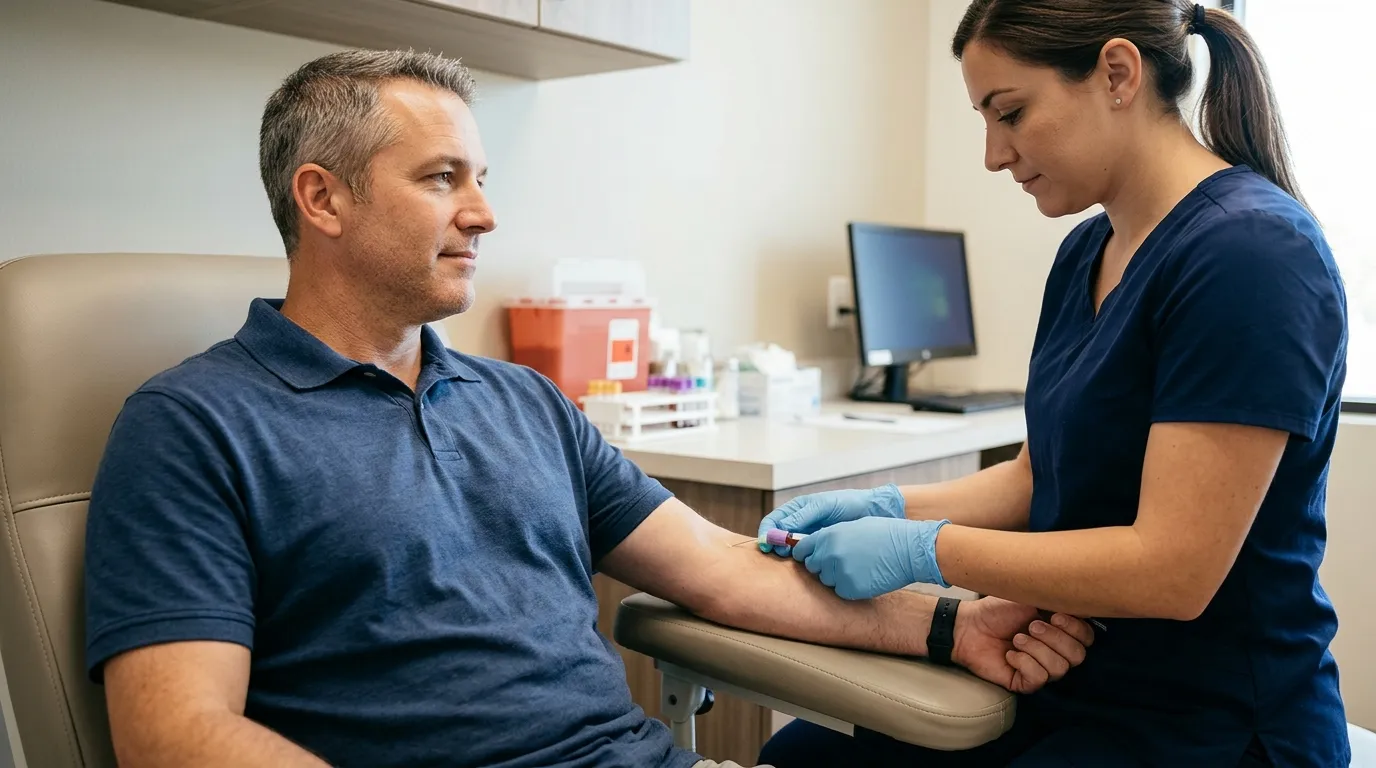
If the symptoms described throughout this article sound familiar, the single most important step you can take is getting your hormone levels tested. Many men have lived with low testosterone symptoms for years — sometimes decades — without ever connecting the dots. Night sweats, excessive daytime sweating, heat intolerance, fatigue, and mood changes are often attributed to stress, aging, or poor sleep hygiene when hormones are actually the primary driver.
The diagnostic process is straightforward. A morning blood draw measuring total testosterone is the standard starting point, since levels are highest in the early morning. If results fall below normal range, follow-up testing for free testosterone, LH, FSH, estradiol, prolactin, thyroid hormones, and a metabolic panel helps paint the full picture. You can learn more about this process in our guide on How to Get Diagnosed with Low Testosterone (Full Process).
Finding the right provider matters enormously. A TRT-experienced physician or clinic will not only interpret your labs correctly but will also take the time to understand your symptoms, lifestyle, and goals before recommending a treatment approach. General practitioners are often less familiar with the nuances of male hormone optimization, which is why many men seek out dedicated TRT clinics or telehealth platforms that specialize in this area. Find a TRT clinic near you using our directory, or explore our comparison of Telehealth TRT Providers: Side-by-Side Comparison if you prefer to start from home.
If you're not sure whether your symptoms are significant enough to warrant testing, remember: you don't need to be severely symptomatic to deserve answers. Even subclinical low testosterone can cause meaningful quality-of-life impacts. The free Low T symptom quiz is a good starting point to assess your symptom profile before booking an appointment.
Managing Sweating While You Wait for Treatment to Work
While TRT is the most effective long-term solution for sweating caused by low testosterone, there are practical strategies that can help manage symptoms in the interim or as complementary measures during early treatment.
- Sleep environment optimization: Keep your bedroom cool (between 65–68°F is often recommended), use moisture-wicking bedding, and consider a fan or cooling mattress pad to reduce night sweat severity.
- Alcohol and caffeine reduction: Both are vasodilators that can trigger or worsen hot flashes and sweating episodes. Moderating intake — especially in the evening — can reduce frequency.
- Stress management: Elevated cortisol from chronic stress compounds hormonal dysregulation. Regular exercise, mindfulness practices, and adequate sleep hygiene all support healthier hormonal function.
- Dietary adjustments: Spicy foods, processed sugars, and very hot beverages can provoke sweating episodes in men already prone to them. Identifying personal triggers helps reduce day-to-day discomfort.
- Lightweight, breathable clothing: Natural fibers like cotton and linen regulate body temperature more effectively than synthetics, which can trap heat and make sweating more uncomfortable.
These measures won't resolve the underlying hormonal imbalance, but they can meaningfully improve daily comfort while you pursue proper diagnosis and treatment. They're also useful complements to TRT for men who want to optimize their overall wellbeing during therapy.
Taking the Next Step: From Frustration to Real Relief
Living with unexplained sweating, disrupted sleep, and the fatigue that comes with it can feel isolating — especially when no one around you seems to understand what you're dealing with. The connection between low testosterone and sweating is real, well-supported by clinical evidence, and increasingly recognized by men's health specialists. You're not imagining it, and you're not alone.
The most empowering thing you can do right now is get informed and take action. Start with a conversation with a qualified TRT provider who can order the right labs and interpret your results in context. If you're dealing with low testosterone and sweating along with other symptoms like fatigue, mood changes, or reduced libido, you deserve a thorough evaluation — not a brush-off. For a broader look at the full symptom picture, our guide on 10 Signs of Low Testosterone in Men is an excellent resource, as is our overview of Low Testosterone Symptoms After 40: What's Normal?
TRT is an FDA-recognized, clinically established therapy that has helped hundreds of thousands of men reclaim their quality of life. When managed by a knowledgeable provider with regular monitoring, it is a safe and effective path to resolving the hormonal disruptions — including excessive sweating — that make daily life harder than it needs to be. Find a TRT clinic near you and take that first step toward feeling like yourself again.
Sources & References
- Testosterone Therapy in Men With Hypogonadism: An Endocrine Society Clinical Practice Guideline — Journal of Clinical Endocrinology & Metabolism [Link]
- Hypogonadism in Men — StatPearls / National Library of Medicine [Link]
- Male Hypogonadism: Symptoms and Causes — Mayo Clinic [Link]
- Hot Flashes and Sweating in Male Hypogonadism — PubMed / Journal of Urology [Link]
- Testosterone and Thermoregulation: Vasomotor Symptoms in Men With Low Testosterone — PubMed / Current Opinion in Endocrinology [Link]
- Night Sweats: Causes — Mayo Clinic [Link]
- Evaluation and Treatment of Male Hypogonadism — American Urological Association [Link]
Frequently Asked Questions
Ready to Take the Next Step?
Check your symptoms with our free quiz or browse 2,500+ verified TRT clinics.