Medical Disclaimer
The information on this website is for educational purposes only and is not a substitute for professional medical advice, diagnosis, or treatment. Always consult a qualified healthcare provider before starting any hormone therapy. Individual results may vary. TRTscout does not provide medical services or prescribe medications.
Key Takeaways
- SHBG (sex hormone-binding globulin) binds tightly to testosterone, making it biologically inactive — only free testosterone is usable by your body.
- High SHBG can cause real low-testosterone symptoms even when total testosterone appears normal on lab work.
- SHBG is influenced by age, body weight, thyroid function, insulin resistance, liver health, and certain medications.
- Total testosterone alone is an incomplete measure — SHBG and free testosterone must be evaluated together for an accurate hormonal picture.
- TRT typically lowers SHBG, increasing the free testosterone fraction, but dosing must be individualized based on each man's SHBG levels.
- Lifestyle changes including resistance training, body composition improvement, and managing thyroid and metabolic health may help modestly reduce elevated SHBG.
SHBG And Testosterone: What Is SHBG and Why Does It Matter?
If you've been researching your testosterone levels, you've likely come across a confusing number on your lab report labeled SHBG. Understanding the relationship between shbg and testosterone is one of the most important — and most overlooked — parts of men's hormonal health. SHBG, or sex hormone-binding globulin, is a protein produced primarily by the liver that binds tightly to testosterone in your bloodstream. When testosterone is bound to SHBG, your body cannot use it. Only the testosterone that is free from this binding protein can enter your cells, activate receptors, and produce the effects you associate with healthy testosterone levels.
Disclaimer: This article is for educational purposes only and does not constitute medical advice. Always consult a qualified healthcare provider before making changes to your hormone therapy or treatment plan.
Think of SHBG as a taxi that picks up testosterone from the bloodstream and takes it out of active circulation. The more taxis on the road, the less testosterone is available at your destination — your muscles, brain, libido centers, and energy pathways. A man with a total testosterone of 600 ng/dL but very high SHBG may functionally experience the symptoms of low testosterone, because most of that testosterone is bound up and biologically inactive.
This is why looking at total testosterone alone often gives an incomplete picture. As explained in our guide to Free Testosterone vs Total: Which Number Matters More?, your free testosterone — the portion not bound to SHBG or other proteins — is frequently the more clinically relevant figure. Understanding SHBG is essential for anyone navigating hormone testing or considering treatment.

How SHBG Binds to Testosterone: The Science Explained
SHBG binds to sex hormones with varying degrees of affinity. It binds most strongly to dihydrotestosterone (DHT), followed closely by testosterone, and much more loosely to estradiol. When SHBG attaches to testosterone, it forms a bound complex that circulates in the blood but cannot pass through cell membranes to activate androgen receptors. Only free testosterone — roughly 1 to 3 percent of total testosterone in most men — is immediately bioavailable.
There is also a middle category: testosterone loosely bound to albumin, another blood protein. Albumin-bound testosterone is more easily released into tissues than SHBG-bound testosterone, and some clinicians include it alongside free testosterone to calculate what is called bioavailable testosterone. If your provider or lab report references bioavailable testosterone, it is the sum of free testosterone plus albumin-bound testosterone.
Your SHBG levels are not fixed. They are influenced by a wide range of physiological factors including age, body composition, liver health, thyroid function, insulin sensitivity, and certain medications. This means that even if your total testosterone remains stable, changes in SHBG can shift the balance of free versus bound testosterone significantly — pushing you from feeling well to experiencing real symptoms without any change in your total T number.
For a deeper look at how these fractions are measured and what your lab values mean, see our detailed breakdown: TRT Lab Results Explained: What Your Numbers Mean. Understanding SHBG's binding mechanics helps you have a much more informed conversation with your doctor about what your results actually indicate.
What Causes High SHBG in Men?
High SHBG is more common than many men realize, and it has a number of well-documented causes. When SHBG is elevated, it binds more testosterone, reducing the free fraction and potentially causing symptoms of low testosterone even when total T looks acceptable on paper.
Common Causes of Elevated SHBG
- Aging: SHBG rises naturally with age, approximately 1 to 2 percent per year after age 40. This is one reason why natural testosterone decline by age is more complex than simply watching total T fall — free testosterone drops faster because SHBG is simultaneously rising.
- Low body weight or low body fat: Adipose tissue produces insulin and certain hormones that suppress SHBG. Very lean men often have higher SHBG.
- Liver disease: Because SHBG is produced in the liver, liver inflammation or cirrhosis can elevate its production unpredictably.
- Hyperthyroidism: Thyroid hormones stimulate SHBG synthesis. Men with overactive thyroid frequently have elevated SHBG.
- Certain medications: Anticonvulsants, some antifungals, and oral estrogens can raise SHBG.
- Fasting and caloric restriction: Extended fasting has been shown in research to increase SHBG, further reducing free testosterone.
If your SHBG is elevated and you're experiencing symptoms like fatigue, low libido, mood changes, or difficulty building muscle, it may be worth asking your provider about calculating your free testosterone. You can review what those symptoms look like with our article on 10 Signs of Low Testosterone in Men. The right provider will always evaluate SHBG alongside total and free testosterone rather than treating these numbers in isolation.
What Causes Low SHBG in Men?
While high SHBG gets more attention in the context of low testosterone symptoms, low SHBG presents its own set of clinical considerations. When SHBG is low, more testosterone circulates in the free, active form — which sounds beneficial but can sometimes contribute to unwanted effects depending on the hormonal context.
Common Causes of Low SHBG
- Insulin resistance and type 2 diabetes: High insulin levels suppress SHBG production in the liver. Men with metabolic syndrome or obesity frequently have low SHBG alongside lower total testosterone.
- Hypothyroidism: An underactive thyroid is associated with decreased SHBG levels.
- High androgen levels: Elevated testosterone or anabolic steroid use suppresses SHBG.
- Obesity: Excess body fat, particularly visceral fat, is associated with lower SHBG through its effects on insulin and estrogen metabolism.
- Glucocorticoid use: Chronic use of corticosteroids can suppress SHBG production.
In the context of TRT and diabetes, low SHBG is often part of the clinical picture that providers watch carefully. A man with low SHBG and low total testosterone may still have adequate or even high free testosterone — another reason why interpreting any single hormone number without context can be misleading. A comprehensive panel that includes SHBG, total testosterone, and free testosterone gives your provider the full picture they need to make sound clinical decisions.

How SHBG Affects Your Symptoms and Quality of Life
The practical consequence of high SHBG is that you may experience the classic symptoms of low testosterone — fatigue, reduced libido, difficulty concentrating, loss of muscle mass, increased body fat, and mood changes — even when your total testosterone appears in the normal range. This creates a frustrating situation where a man goes to his doctor complaining of real, life-affecting symptoms, receives a total testosterone test that comes back at 450 or 500 ng/dL, and is told everything is fine.
But if that same man's SHBG is running at 70 or 80 nmol/L (well above the normal range of roughly 10–57 nmol/L for adult men), his calculated free testosterone may be in the low or low-normal range — and his symptoms become entirely explainable. This is precisely why the shbg and testosterone relationship matters so much in clinical practice, and why a thorough hormonal evaluation must include SHBG.
Symptoms you might experience with high SHBG and effectively low free testosterone include:
- Persistent fatigue despite adequate sleep
- Reduced sex drive or difficulty with erections — see TRT for Erectile Dysfunction
- Brain fog and difficulty focusing — related reading: TRT and Brain Fog
- Difficulty building or maintaining muscle mass — see Low Testosterone and Muscle Weakness
- Mood changes, irritability, or low motivation
- Increased body fat, especially around the midsection
If you recognize these symptoms, it may be worth taking the free Low T symptom quiz to get a clearer picture of your hormonal health before your next appointment. A qualified provider will then be able to order the right tests, including SHBG, to evaluate your full hormonal status.
SHBG Testing: What to Ask For and How to Interpret Results
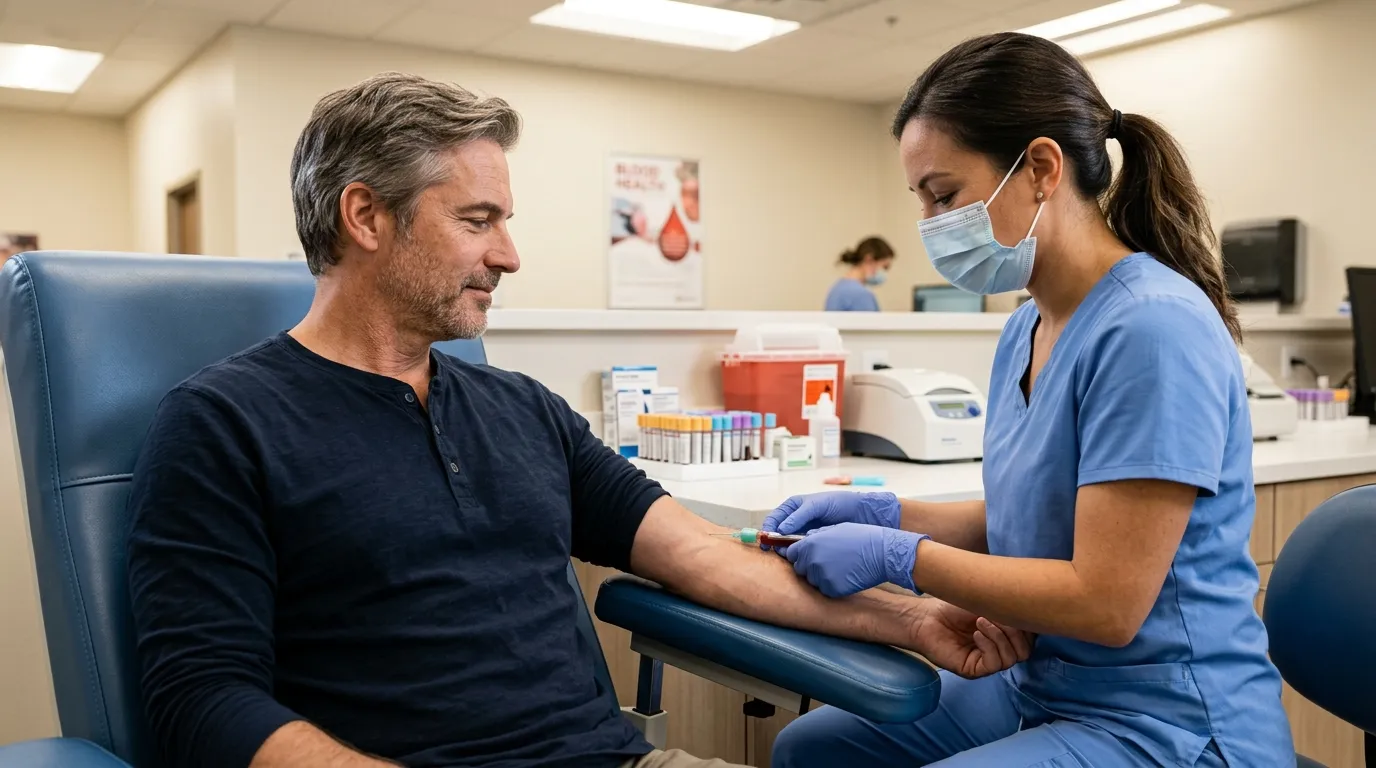
SHBG is measured with a simple blood test and is often not included in standard testosterone panels unless specifically requested. This is an important practical point: if you're having your testosterone tested, ask your provider to include SHBG so that free testosterone can either be directly measured or accurately calculated.
SHBG and Testosterone: Understanding Your Lab Report
Most labs report SHBG in nmol/L. The reference range for adult men is generally 10 to 57 nmol/L, though optimal ranges may vary by age and clinical context. When your SHBG result is in hand, your provider can calculate free testosterone using the Vermeulen formula, or your lab may offer a directly measured free testosterone value. For a comprehensive look at which tests matter most, see our guide on TRT Blood Work: Which Tests You Need Before and During Treatment.
| SHBG Level (nmol/L) | Interpretation | Clinical Implication |
|---|---|---|
| Below 10 | Low | More free T; check for insulin resistance or hypothyroidism |
| 10–57 | Normal range (adult men) | Typical free T fraction |
| 57–80 | Elevated | Reduced free T; may explain low-T symptoms |
| Above 80 | High | Significantly reduced free T; warrants clinical attention |
Testing accuracy also matters. As discussed in Testosterone Testing Accuracy: How Reliable Are Your Results?, the method used to measure free testosterone can vary significantly between labs, and a calculated free testosterone based on SHBG and albumin is often more reliable than a direct measurement depending on assay quality.
SHBG, TRT, and How Treatment Affects the Protein
When a man begins testosterone replacement therapy, SHBG levels typically decrease. This happens because exogenous testosterone suppresses SHBG production — the liver responds to higher circulating androgens by reducing the protein that binds them. For most men on TRT, this is a beneficial effect: lower SHBG means a greater proportion of testosterone circulates in the free, active form, amplifying the benefits of treatment even at moderate doses.
However, the relationship between shbg and testosterone on TRT is nuanced. Men with very high pre-treatment SHBG may require higher testosterone doses to achieve adequate free testosterone levels, because so much of the administered hormone continues to be bound up. This is why dosing on TRT is always individualized — a one-size-fits-all approach ignores the significant variation in SHBG between patients. A good provider will monitor SHBG levels throughout treatment and adjust protocols accordingly, as outlined in Testosterone Dosage Adjustment: When and Why to Change.
The delivery method of TRT may also influence SHBG differently. Oral testosterone formulations, for example, pass through the liver and may have a more pronounced effect on SHBG than injections. Injectable testosterone — whether cypionate or enanthate — is the most commonly prescribed form and has a well-understood impact on SHBG levels over time. For a comparison of delivery methods, see TRT Injections vs Gel: Which Is Better?
If you're ready to explore TRT with a provider who understands the nuances of SHBG, you can find a TRT clinic near you through the TRTscout directory, where every listed provider is experienced in comprehensive hormonal evaluation.

Can You Lower High SHBG Naturally?
For men with moderately elevated SHBG who are not yet ready for TRT, or who want to optimize their hormonal environment alongside therapy, several evidence-informed lifestyle strategies may help modestly lower SHBG and improve the free testosterone fraction. These are not substitutes for medical treatment in men with clinically significant low testosterone, but they can be useful tools in a broader wellness strategy.
Lifestyle Strategies That May Reduce SHBG
- Reduce excess cardio and increase resistance training: Heavy resistance training has been shown to improve insulin sensitivity and modestly lower SHBG in some studies. Excessive endurance training, conversely, may increase cortisol and SHBG over time.
- Optimize body composition: Reducing visceral fat through improved diet and regular exercise supports better insulin sensitivity, which in turn can reduce SHBG in men whose elevation is driven by metabolic dysfunction.
- Address thyroid health: If hyperthyroidism is driving elevated SHBG, treating the underlying thyroid condition will often normalize SHBG. Ask your provider to include thyroid panels in your workup. See also TRT and Thyroid: How Testosterone and Thyroid Interact.
- Manage alcohol intake: Moderate to heavy alcohol consumption stresses the liver and may elevate SHBG over time. See our article on TRT and Alcohol for more context.
- Consider micronutrient optimization: Some research suggests that adequate magnesium, zinc, and boron intake may be associated with lower SHBG and higher free testosterone, though the effect sizes are modest and these should be viewed as supportive rather than curative measures.
These strategies are most useful when combined with professional medical guidance. If lifestyle changes don't move the needle on your symptoms or labs, that's a clear signal to consult a qualified TRT provider who can evaluate whether medical treatment is appropriate.
SHBG Monitoring During TRT: What Good Care Looks Like
Monitoring SHBG is an essential part of responsible TRT management. A well-structured TRT protocol doesn't just track total testosterone — it tracks the full hormonal picture, including SHBG, free testosterone, estradiol, LH, FSH, and other relevant markers. This comprehensive approach is what separates high-quality TRT care from a simple script and no follow-up.
During active TRT, SHBG should typically be tested every three to six months alongside a full hormone panel. If your SHBG is falling too low — sometimes seen with high testosterone doses or in men predisposed to low SHBG — your provider may adjust your dosing schedule or delivery method. Splitting weekly injections into more frequent smaller doses, for example, may reduce SHBG suppression compared to a single large weekly dose, while also producing more stable testosterone levels. For more on this, see TRT Injection Frequency: Once vs Twice Weekly.
Monitoring also helps identify patterns over time. If a man's free testosterone remains suboptimal despite adequate total T on TRT, persistent elevation of SHBG may be the explanation — and the solution may involve addressing the underlying driver (thyroid, liver health, body composition) rather than simply increasing the testosterone dose.
To understand what optimal lab values look like during treatment, our guide on Optimal Testosterone Levels on TRT: What to Aim For provides clear targets your provider can use as a reference. Understanding shbg and testosterone together — not in isolation — is what allows for truly personalized, effective care.
Next Steps: Getting a Complete Hormonal Evaluation
If you've read this far, you now understand that shbg and testosterone are deeply interconnected, and that evaluating one without the other can lead to missed diagnoses and undertreated symptoms. The key message is this: total testosterone alone is not enough. A complete evaluation that includes SHBG, free testosterone, and other relevant markers gives you and your provider the information needed to make the right clinical decisions.
If you're experiencing symptoms of low testosterone — fatigue, low libido, mood changes, difficulty building muscle, or brain fog — and your total testosterone has been brushed off as normal, it's worth asking for a full hormonal panel that includes SHBG. You may find that the binding protein is the missing piece of your puzzle.
Start by taking the free Low T symptom quiz to assess your symptom burden, and then connect with a qualified provider who will look at the complete picture. You can find a TRT clinic near you through the TRTscout directory, where listed providers are experienced in comprehensive hormonal evaluation, including SHBG testing and interpretation. Understanding the full relationship between shbg and testosterone is not just academic — it's the foundation of effective, personalized hormone care.
Sources & References
- Sex Hormone-Binding Globulin and the Free Hormone Hypothesis — PubMed / Journal of Clinical Endocrinology & Metabolism [Link]
- Testosterone and SHBG: Clinical Significance — Endocrine Society [Link]
- Testosterone Deficiency — Clinical Practice Guidelines — American Urological Association [Link]
- SHBG Reference Range and Clinical Interpretation — Mayo Clinic [Link]
- Age-Related Changes in SHBG and Free Testosterone — PubMed / Journal of Clinical Endocrinology & Metabolism [Link]
- Insulin Resistance and SHBG: Metabolic Associations — PubMed / Diabetes Care [Link]
- Testosterone Therapy in Men With Hypogonadism: An Endocrine Society Clinical Practice Guideline — Endocrine Society / Journal of Clinical Endocrinology & Metabolism [Link]
Frequently Asked Questions
Ready to Take the Next Step?
Check your symptoms with our free quiz or browse 2,500+ verified TRT clinics.